
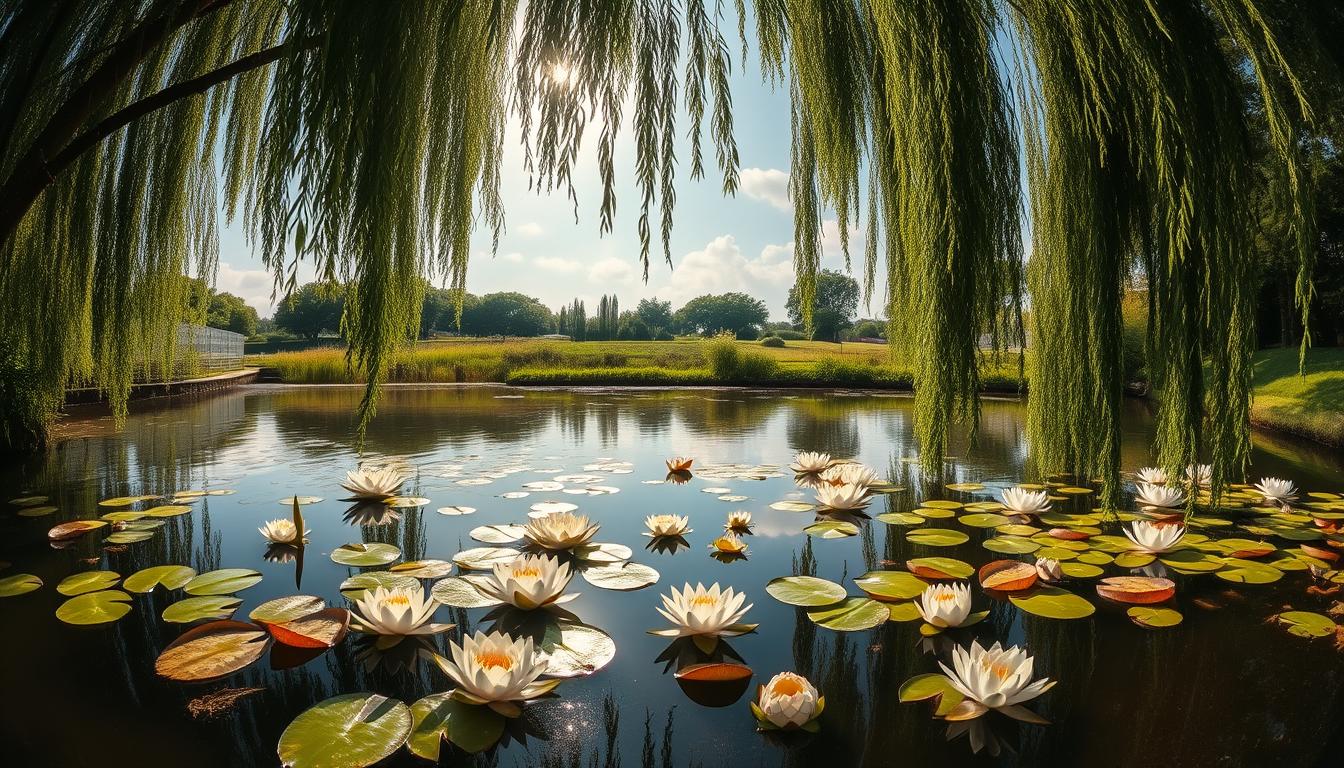
Standing by a serene pond, surrounded by nature’s beauty, can be calming. The gentle ripples on the water’s surface create a sense of serenity. This invites you to pause and unwind.
The tranquility of the pond is perfect for reflection and self-discovery. As you breathe in the fresh air, the calmness of the environment soothes your mind.
Data from sources like “Calm Waters River” shows people seek peaceful natural environments to escape daily life stresses. A visit to a pond can rejuvenate your spirit and find inner peace.
The Allure of Stil Waters
The calm of a pond’s waters has a special charm. It mirrors the sky, linking earth to heaven. This creates a sense of unity.
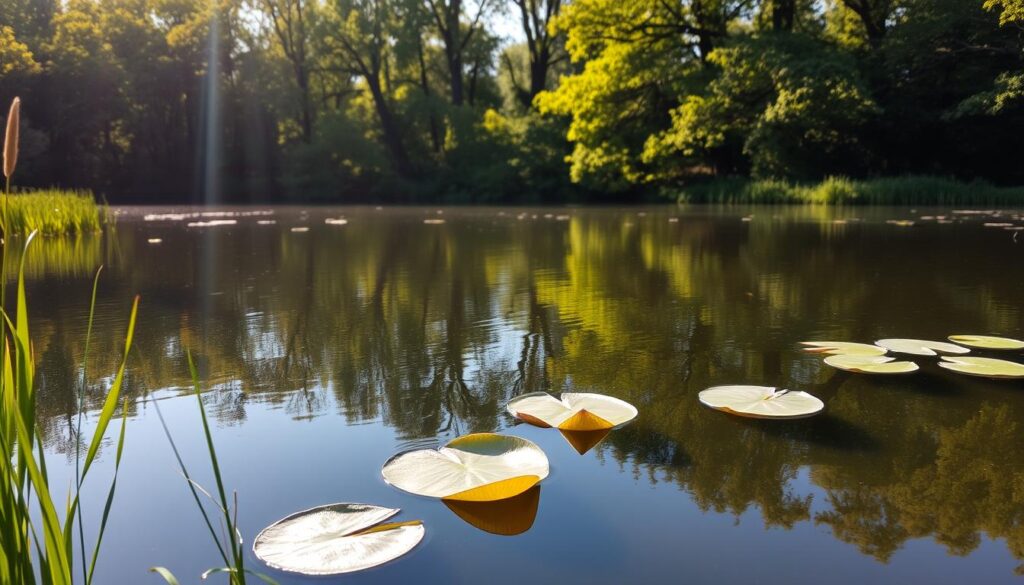
A pond’s surface reflects well because it’s calm. Without wind or currents, it acts like a mirror. This stilness makes the pond’s reflection beautiful.
The Psychological Draw of Reflective Surfaces
Reflective surfaces calm our minds. Looking at a pond can be meditative. It helps us slow down and enjoy the moment.
The beauty of stil waters goes beyond looks. It also improves our mental health. By understanding how they work, we value them more.
Finding Solitude in a Busy World
A serene pond can be a peaceful escape in our fast-paced lives. It’s a place to find reflection away from the chaos. Visiting a pond lets you connect with nature and find calm.
Ponds are known for their tranquility, perfect for quiet thoughts. “Red House by the Sea” highlights the importance of peaceful spots for mental health.
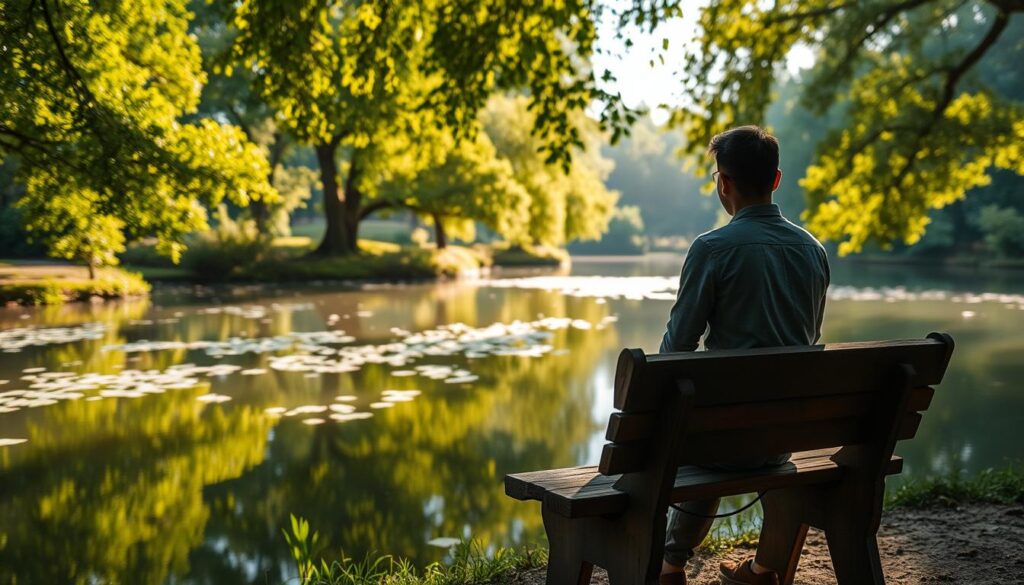
Visit the pond at dawn or dusk for the best experience. The soft light adds to the beauty and makes it less crowded. This time is ideal for a peaceful visit.
What to Bring for Meaningful Pond Visits
Bring a journal to write down your thoughts. A camera helps capture the pond’s beauty. Don’t forget a picnic to enjoy the peaceful atmosphere.
These items make your pond visits more special. They help you enjoy solitude and reflection away from the busy world.
The Science of Reflection on Water
Reflections on water have always fascinated us. They make us explore the science behind them. The law of reflection, a key physics principle, explains how they work. It says the angle of incidence is the same as the angle of reflection.
Many things affect how clear a water reflection is. Surface disturbance like ripples can mess up the image. The depth of the water and particles in it also play a role.
Factors Affecting Water Reflection Clarity
Several factors influence how clear a water reflection is. Surface tension, water depth, and impurities are important. Clean and calm water usually gives the best reflections.
Capturing Reflections in Photography
Photographers can take amazing reflections by knowing what affects their clarity. A polarizing filter can cut down glare and make reflections clearer. Shooting during the golden hour adds warmth and depth to photos.
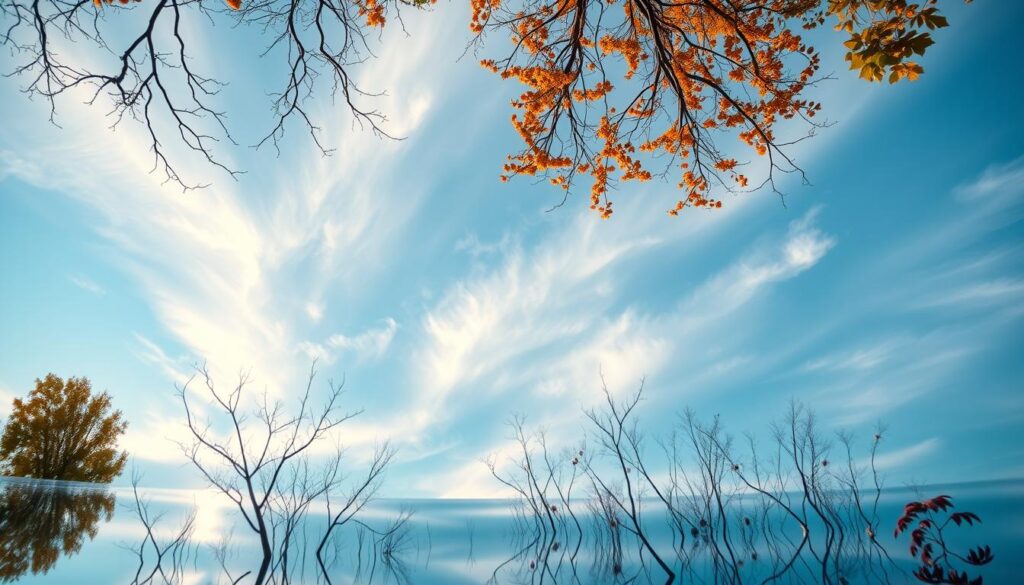
Landscape photographers say, “A calm water surface acts like a mirror, reflecting the surrounding landscape with clarity and precision.” To capture these moments, you need patience and knowledge of light, water, and the environment.
In conclusion, the science of water reflection is both interesting and beautiful. By understanding what makes reflections clear and using photography tips, we can enjoy and capture the beauty of water reflections.
Seasons Change, Reflections Remain
The pond is a symbol of peace and reflection, no matter the season. It changes with the seasons, showing off a variety of colors and life.
In spring, the pond comes back to life with the thaw. New life bursts out, and the reflection of blossoming trees and flowers is beautiful. It brings a sense of renewal and hope.
Summer brings warmth and long days. The pond becomes a home for wildlife. The calm waters reflect the lush greenery and flowers, creating a peaceful scene for reflection.
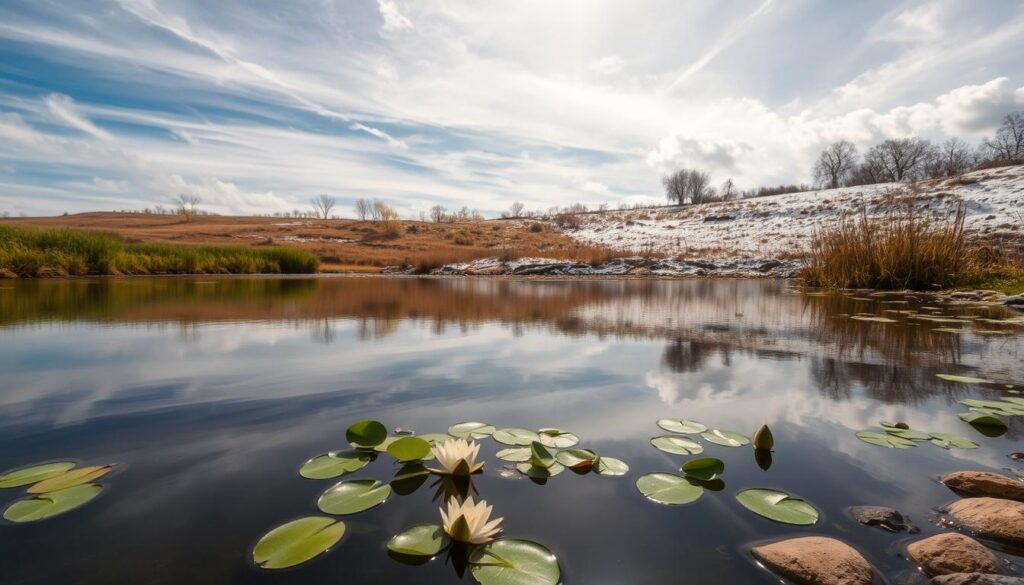
Autumn brings a riot of colors to the landscape. The pond’s surface mirrors this, giving a moment for contemplation amidst the change.
In winter, the pond may freeze, creating a calm and monochromatic scene. The quiet of the frozen pond offers a peaceful reflection.
Through all seasons, the pond is a constant source of serenity and reflection. It reminds us that while life changes, some things remain the same, bringing us peace.
The Art of Reflection: Finding Meaning in Stilness
The gentle ripples on a pond’s surface show us the ups and downs of our thoughts. They teach us the art of reflection. Standing by the calm pond, we can explore our minds deeply, gaining a better understanding of ourselves.
Being in nature, near a quiet pond, boosts mindfulness and calmness. The stilness of the pond is perfect for meditation. It helps us quiet our minds and tune into our inner selves.
To make meditation by the pond better, use breathing techniques. Deep, steady breathing calms the mind and connects us with nature. This connection strengthens our bond with ourselves and the world around us.
Letting Thoughts Flow Like Water
While sitting by the pond, let your thoughts flow like the water. Watch them without getting caught up, just like the ripples on the pond. This practice builds mindfulness and brings inner peace.
By embracing the art of reflection and using meditation and mindfulness, we find meaning in the stilness of the pond. This practice helps us understand ourselves and our role in the world more deeply.
Pond Life: The Ecosystem Within
Ponds are more than just water; they are lively ecosystems. They support a variety of biodiversity. This balance between plants and animals makes a thriving community.
The life in and around a pond is amazing. From tiny microorganisms to visiting birds, each plays a key role. They all help the ecosystem thrive.
Birds and Insects That Call Ponds Home
Ponds draw many birds and insects, like dragonflies and water striders. They come for breeding, feeding, or shelter. These creatures are vital to the pond’s health and balance.
Plant Life Around the Edges
The pond’s edges are home to many plants, like cattails and water lilies. These plants stabilize the soil and provide shelter. They also boost the pond’s biodiversity.
Fish and Amphibians
Fish and amphibians, like frogs and salamanders, live in ponds. They are important as both predators and prey. They also show the pond’s health.
Underwater Plant Communities
Underwater, ponds have their own plant communities, including submerged plants. These plants are essential. They provide oxygen, food, and shelter for aquatic life.
In summary, ponds are rich and diverse ecosystems. They support a wide range of nature and biodiversity. Understanding these ecosystems helps us connect with nature more deeply.
Historical Significance of Ponds in American Culture
Ponds have a big role in American culture, touching literature, art, and our national feelings. They are a key theme in American literature, like in Henry David Thoreau’s “Walden.” There, the pond stands for simplicity, self-sufficiency, and a strong bond with nature.
Ponds have also caught the eye of American artists. Famous pond paintings, like those by the Hudson River School, show off the beauty of American landscapes. They also express national pride and the awe-inspiring.
Lessons from “Walden” for Modern Life
Thoreau’s thoughts by Walden Pond teach us valuable lessons for today. He shows the value of living simply and connecting with nature. His journey of self-reliance inspires people to seek a more meaningful life, away from material things.
Famous Pond Paintings and Their Meaning
Pond paintings, like Thomas Cole’s, carry deep meanings. They show the calm and untouched beauty of the American wilderness. These works not only highlight the beauty of ponds but also their spiritual value.
In conclusion, ponds have greatly shaped American culture, influencing literature and art. Their historical importance continues to impact us today, giving us insights into the American spirit and its bond with nature.
Creating Your Own Reflection Space
Creating a space for reflection can bring inner peace. It could be a quiet corner at home or a peaceful spot outdoors. A reflection space is like a sanctuary for your mind.
Start by finding hidden gems near you. Look for quiet ponds, serene lakes, or small streams. Apps and online resources can help you find these spots.
Apps and Resources for Discovering Hidden Gems
Many apps and websites can guide you to secluded spots. Use mapping apps to find parks or water bodies. Websites for outdoor activities often list perfect spots for reflection.
Respecting Nature During Your Visits
When you visit these spots, remember to respect the environment. Follow the “Leave No Trace” principle, be careful around wildlife, and don’t pollute.
Environmentalist Aldo Leopold said, “In wildness is the preservation of the world.” This shows how vital it is to keep nature safe for the future.
“In wildness is the preservation of the world.”
Small Water Features for Limited Spaces
If you don’t have a big outdoor space, consider a small water feature at home. A tabletop fountain or a small pond can be a great option.
Plants That Enhance Reflective Qualities
Adding certain plants to your space can make it even more peaceful. Water lilies or lotus flowers are not only pretty but also add to the calm atmosphere.
By creating or finding your own reflection space, you can deepen your inner peace and connect with nature.
The Ripples of Transformation: Taking Pond Wisdom Into Daily Life
Standing by a calm pond, we see the world mirrored in its waters. It invites us to stop and think. The wisdom we find here can change us deeply, affecting our everyday lives.
The pond’s calmness teaches us to live more mindfully. Its ripples show us that small actions can make a big difference. This encourages us to choose wisely, aiming for positive change.
By letting pond wisdom guide us, we learn more about ourselves and the world. This knowledge helps us live in harmony and balance. It makes personal growth a constant journey.
The wisdom from a peaceful pond helps us face life’s hurdles with clarity and ease. It leads to a more rewarding life every day.