

Feeling anxious sometimes is normal. It happens when we worry about the future. This worry can be about what’s next in minutes, days, or months.
Managing anxious thoughts is possible. But, when they stick around, they can mess with our daily lives. Knowing why we feel anxious and how it affects us is key to calming down.
By looking into why we feel anxious and finding good ways to deal with it, we can take back control. This leads to a more peaceful and happy life.
Understanding Anxiety: What You Need to Know
To tackle anxiety, it’s key to know its definition, causes, and effects. Experts say anxiety is worry about a future threat. For example, worrying about a tough conversation can make you feel sick days before it happens.
Anxiety shows up in different ways for everyone. Some might feel their heart racing or sweat a lot. Others might get upset easily or feel too much to handle. Knowing how anxiety affects you is important for dealing with it.
The causes of anxiety vary widely. They can include genetics or stressful life events. Moving to a new place or starting a new job can make people anxious. Being very sensitive or needing everything to be perfect can also lead to anxiety.
Understanding anxiety and its causes is the first step to managing it. This knowledge helps you find ways to lessen its impact on your life.
The Science Behind Anxiety
Anxiety is a complex process in the brain. It involves many neurological pathways. When we see a threat, our brain’s fear center is activated. This leads to physical and emotional symptoms.
The Role of the Limbic System
The Role of the Limbic System
Psychologist Susan Albers, PsyD, says, “Anxious thoughts activate the limbic system, the fear center in our brain.” The limbic system is key in processing emotions like fear and anxiety. Anxious thoughts make it work hard, releasing stress hormones like cortisol and adrenaline.
“Anxious thoughts activate the limbic system, the fear center in our brain.” – Susan Albers, PsyD
This makes us feel anxious, with symptoms like a racing heart and sweating. Knowing how the limbic system works helps us manage anxiety better.
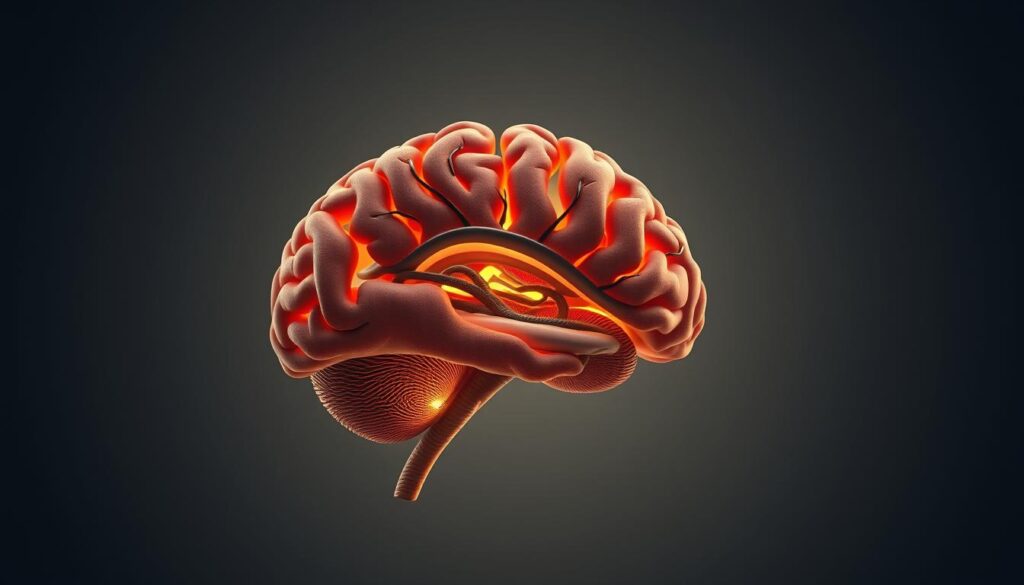
Understanding anxiety’s science helps us see its impact. It shows anxiety is more than just feeling anxious. It’s a mix of brain, emotions, and physical responses.
Knowing the signs and how they work can help us control our anxiety.
Triggers of Anxiety Disorders
Anxiety disorders are complex and can be triggered by many things. This includes health concerns and relationship problems. Knowing what triggers anxiety is key to managing it.
Work-related stress is a common trigger. Deadlines, high expectations, and a demanding job can cause anxiety. Chronic stress at work can lead to anxiety disorders if not handled well.
Relationship issues are also a big trigger. Problems in personal relationships, like romantic or family issues, can cause a lot of distress. The emotional strain of these problems can trigger anxiety in many people.
Health concerns are another major trigger. Worrying about one’s health or a loved one’s health can cause persistent anxiety. Health anxiety is very debilitating because it involves constant fears about illness.
Other life challenges, like financial problems, school issues, or big life changes, can also trigger anxiety. The uncertainty and stress from these challenges can overwhelm someone’s ability to cope, leading to anxiety disorders.
It’s important to remember that triggers vary from person to person. What causes anxiety in one person might not affect another. Personalized strategies for managing anxiety are very important.
Strategies for Managing Anxiety
Managing anxiety well means understanding your feelings and using practical strategies. It’s key to know and accept your anxiety. Don’t hide or deny your feelings.
Being kind to yourself is a powerful anxiety management strategy. Seeing anxiety as normal can help you feel better. Remember, you can do well even when anxious.
Staying in the present moment is another important strategy. Mindfulness, like meditation and deep breathing, can calm your mind. These anxiety reduction techniques are easy to do anywhere.

Living a healthy lifestyle is also key. Eating right, sleeping well, and exercising can lower your anxiety. Exercise, in particular, boosts mood with natural chemicals called endorphins.
It’s also good to have ways to handle anxiety triggers. This could be journaling, talking to a friend, or doing a hobby. Having different ways to cope helps you manage anxiety better.
By using these strategies every day, you can manage your anxiety and feel better. Remember, it takes time, patience, and practice to get better at managing anxiety.
Professional Help for Anxiety
When anxiety gets too much, it’s time to get professional help for anxiety. Knowing when to ask for help is key. Look for signs like constant worry that stops you from doing everyday things.
If anxiety stops you from living your life, it’s time to see a mental health professional. They can teach you how to handle your anxiety.
Figuring out when to seek help for anxiety can be tough. Look for signs like always feeling scared, avoiding things, or physical symptoms like a fast heart rate. A professional can help figure out what’s going on and create a plan to help you.
Getting help for anxiety is a brave move. It shows you’re taking steps to get better. By talking to a therapist or psychologist, you’re moving towards a healthier life.
Natural Remedies for Anxiety Relief
Natural remedies can help manage anxiety without medication. Adding these to your daily routine can greatly improve your mental health and overall well-being.
Exercise as a Natural Anxiety Reliever
Exercise is a great way to fight anxiety. It releases endorphins, which make you feel better and more relaxed. Regular exercise can also boost your mood and reduce anxiety.
Mindfulness practices like meditation and deep breathing can calm your mind. They help you stay in the present moment, reducing worries about the past or future.
Dietary Adjustments for Anxiety
Changing your diet can also help with anxiety. Eating a balanced diet with whole foods, fruits, veggies, and lean proteins can stabilize your mood. It’s also good to avoid caffeine, sugar, and processed foods.
By using these natural remedies and making lifestyle changes, you can manage anxiety better. This can improve your mental health significantly.
Building a Support System
Building a support system is key for managing anxiety. Humans are social and need each other. Even a small group can be very helpful.
Having people to talk to when anxious can really help. Social support gives emotional backing and practical help. It makes us feel like we belong.
“You alone can do it, but you can’t do it alone.”
This quote shows why a support system is important. It can be family, friends, or a group. They help us feel less alone and isolated.
When building a support system, find people who understand and support you. This can be friends, family, or mental health professionals. Support groups online or in-person offer a safe place to share and get support.
Having a strong support system helps manage anxiety and improves well-being. It’s about having a network that offers emotional support and connection.
Practicing Self-Care for Anxiety
Taking care of oneself is key to fighting anxiety. Self-care can lessen anxiety symptoms and boost overall happiness.
Getting enough sleep is a top self-care strategy. Try to go to bed early and aim for eight to nine hours each night. A bedtime routine with relaxing activities, like reading or a warm bath, signals sleep time.

Practicing mindfulness before bed also helps. Mindfulness means being in the moment and letting go of past or future worries. It calms the mind and prepares the body for sleep.
Doing relaxing activities all day can also cut down anxiety. This includes meditation, yoga, or just a walk outside.
By focusing on self-care for anxiety, people can manage their symptoms better. It’s about making self-care a daily habit and staying consistent.
Developing Positive Thought Patterns
Having a positive outlook is key for those with anxiety disorders. It’s about learning to change negative thoughts into positive ones. This is called cognitive restructuring. It’s vital for managing anxiety by focusing on balanced thoughts.
First, you need to notice when you have negative thoughts. Understand what makes you think this way. Being mindful helps you spot thoughts that make you anxious.
To tackle negative thoughts, ask yourself if they’re really true. Look for a more positive view of the situation. For example, “I’ve faced tough times before, and I can again.”
Cognitive restructuring isn’t about ignoring problems or being overly positive. It’s about seeing things more fairly. This can lessen anxiety. By doing this, you can think more positively, less influenced by anxiety.
Building positive thoughts takes time and effort. Be patient and keep at it. With consistent practice, you can better manage your anxiety by seeing life more positively.
Lifestyle Changes to Reduce Anxiety
Making certain lifestyle changes can significantly reduce anxiety. By choosing wisely, people can manage their anxiety better and feel better overall.
One important area is dietary changes. Eating a balanced diet with whole foods, fruits, veggies, and lean proteins can help your mood. It’s also key to watch out for caffeine and alcohol, as they can make anxiety worse. Cutting down or avoiding these can really help lower anxiety.
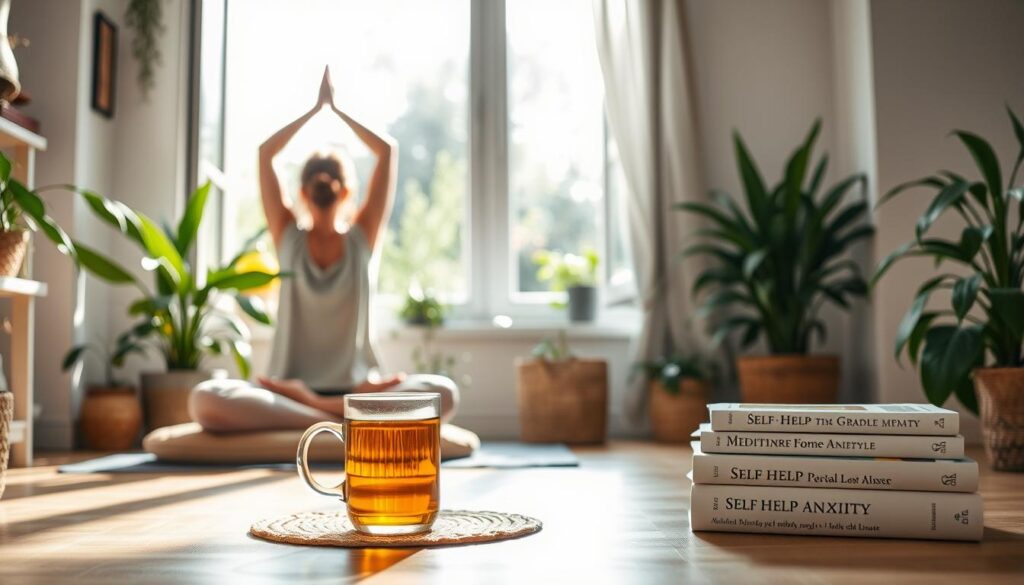
Another key step is to identify and avoid triggers. These can be different for everyone but often include work stress, money worries, or personal issues. Knowing what triggers you can help you find ways to deal with them.
Changing your lifestyle should be done slowly and in a way that lasts. Start with small, easy changes. For instance, try a daily morning routine with meditation or a short walk. This can help set a good day.
By living a healthier lifestyle and sticking to it, you can see a big drop in anxiety. It’s about making small, steady changes for better long-term health.
The Role of Technology in Managing Anxiety
Technology has changed how we deal with anxiety. Now, we have digital tools to help us manage our feelings. These tools are designed to offer relief and support.
Anxiety management apps are a big step forward. They offer features like guided meditations and mood tracking. Apps like Calm and Headspace are popular for their focus on relaxation and mindfulness.
Guided meditation is a key feature in these apps. It guides users to a calm state with step-by-step instructions. It’s great for those who find regular meditation hard. Some apps also include breathing exercises and cognitive-behavioral therapy (CBT) techniques for a complete approach.
Digital tools for anxiety are easy to use. You can access them on your phone or computer. This makes it simple to fit anxiety management into your busy life. Being able to use these tools anytime can help you stay consistent.
When looking at technology for anxiety, find what works for you. Try different apps and tools to see what helps. As the saying goes, “Find relaxation or meditation apps that appeal to you and give them a try.” This way, you can take charge of your anxiety.
In summary, technology is a big help in managing anxiety. With anxiety management apps and other digital tools, we have many resources to help us. As technology keeps improving, we can expect even more ways to manage anxiety.
Learning to Cope with Anxiety
Coping with anxiety is a journey that needs patience, understanding, and resilience. We’ve talked about managing anxiety through professional help, natural remedies, and lifestyle changes. Building resilience is key to better handle anxiety-provoking situations.
Dr. Albers said, “Sometimes, you just have to let anxiety come and go, like riding a wave.” This advice is helpful for many who deal with anxiety. Knowing that anxiety is temporary and will pass is important. It helps build resilience and face challenges positively.
By using the strategies from this article, people can find effective ways to cope. Self-care, positive thinking, and technology are some methods that can be adjusted for personal needs. The important thing is to stay committed and seek help when needed.
Learning to cope with anxiety is about understanding oneself better and building resilience. This way, people can live more fulfilling lives, free from anxiety’s hold.