
In life’s turbulent moments, finding inner peace can seem hard. Yet, it’s in these times that serenity is key to handling chaos.
The story of Jesus calming the storm (Mark 4:35-41) is a powerful reminder. It shows that calmness is possible, even in the stormiest times. This story teaches us the value of faith and staying strong.
Finding calmness isn’t about avoiding storms. It’s about learning to face them with grace. This mindset helps us find a deeper serenity that guides us through tough times.
The Nature of Inner Peace During Chaos
Finding calm in chaos starts with knowing what it’s about and using the right methods. Inner peace isn’t about avoiding problems. It’s about facing them calmly and steadily.
One deep insight is that peace doesn’t mean everything is perfect. It means staying calm in a storm, knowing Jesus is with us. This shows how important faith and spiritual connection are for peace.
Calmness techniques like meditation and deep breathing can keep us grounded. These practices give us a break, helping us see the difference between chaos and our inner peace.
By using calmness techniques and understanding inner peace, we can handle chaotic situations better. It’s about building a strong sense of inner stability that can’t be shaken by outside events.
The quest for inner peace in chaos is both personal and universal. It’s about realizing true peace isn’t about no problems. It’s about having a higher power or a strong will.
Understanding True Calmness
The essence of true calmness is staying calm when life gets tough. This is where mindfulness and meditation come in, helping a lot.
True calmness isn’t just about avoiding chaos. It’s a deep state of being that comes from mindfulness. Being fully present helps you stay calm, no matter what’s happening around you.

Meditation is key to finding calm. It makes you more aware of your thoughts and feelings. This helps you stay calm when things get tough.
Using mindfulness practices like focusing on your breath can bring calm. These practices, along with meditation, help you handle life’s ups and downs with ease.
In short, learning to find true calmness through mindfulness and meditation makes your mind more peaceful. It helps you stay calm, even when things are hard.
The Science Behind Staying Centered
Understanding the science behind staying centered is key to handling life’s challenges. It involves mental and physical practices studied in psychology and neuroscience. These practices help us stay calm under pressure.
Research on the science of calmness reveals that certain activities lower stress. For example, indoor camping, decluttering, or playing board games can distract us from stress. They help us feel calm and centered.
These activities trigger the parasympathetic nervous system. This system balances our body’s stress response. By adding these practices to our daily lives, we can better manage stress and stay calm.
These practices are backed by science. Studies show they reduce stress hormones like cortisol. Regularly doing these activities helps us face life’s challenges better. We experience less stress and overall better well-being.
Mindfulness Practices for Immediate Relief
Mindfulness is a powerful tool for dealing with life’s challenges. It helps us find calm and balance, even when things get tough.
Box Breathing Method
The Box Breathing Method is simple yet effective. It involves breathing in for 4 counts, holding for 4 counts, exhaling for 4 counts, and holding again for 4 counts. This creates a “box” shape with your breath, bringing balance and calm.
To practice Box Breathing, sit comfortably, close your eyes, and start the cycle. Keep going for a few minutes until you feel calm.
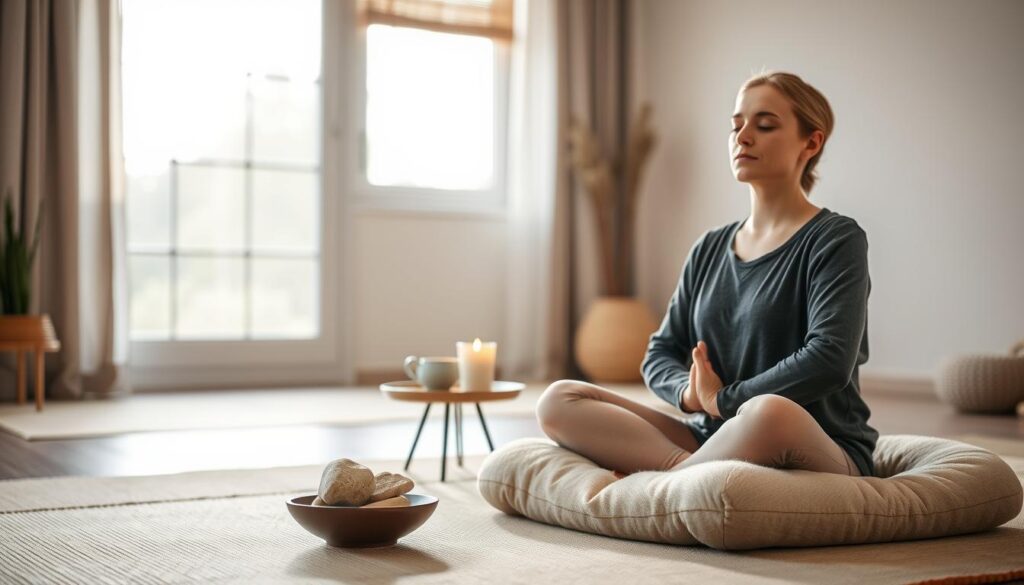
The 4-7-8 Technique, or “Relaxation Breath,” is another great method. You breathe in for 4 counts, hold for 7 counts, and exhale for 8 counts. It can slow your heart rate and help you relax.
To practice the 4-7-8 Technique, sit up straight, place your tongue behind your teeth, and breathe in through your nose. Hold, then exhale through your mouth, making a soft sound. Do this up to three times.
The 5-4-3-2-1 Sensory Method
The 5-4-3-2-1 Sensory Method is a grounding technique. It helps you focus on the present by noticing:
5: Five things you can see.
4: Four things you can touch or feel.
3: Three things you can hear.
2: Two things you can smell.
1: One thing you can taste.
This technique distracts from stress and keeps you grounded in the present, giving you immediate relief.
By adding these mindfulness practices to your daily life, you can build resilience to stress. You’ll also feel more calm and well.
Physical Approaches to Emotional Stability
Looking for emotional balance? Physical practices can help a lot. Emotional stability is key to handling life’s ups and downs smoothly.
Gentle yoga and walking meditation are great for emotional health. They boost both physical and emotional well-being.
Gentle Yoga Poses for Stress Relief
Gentle yoga poses help lower stress and relax you. Child’s Pose and Downward-Facing Dog calm your mind and body.
Adding these poses to your day can cut down stress. It also boosts your emotional balance.
Walking Meditation Techniques
Walking meditation is another way to find emotional stability. It makes you focus on your walk, feeling each step. It teaches mindfulness.
Walking meditation brings awareness and calm. It helps you deal with stress better.
In short, gentle yoga and walking meditation are great for emotional balance. They help manage stress and improve emotional state.
Creating Environments That Promote Calmness
Our surroundings greatly affect our mental state. It’s key to create calming environments. A well-designed space can greatly reduce stress and bring peace.

Decluttering is a powerful way to make a space calm. Clutter can make us feel overwhelmed and anxious. It’s hard to focus and relax when our space is cluttered.
Start by sorting one area at a time. Put items into categories and get rid of what you don’t need. This clears physical space and mental clutter.
Incorporating Calming Elements
Decluttering is just the start. Adding calming elements can make your space even more soothing. Think soft lighting, comfy textiles, and calming colors.
Nature is also key in creating peace. Adding plants or natural elements like wood or stone can bring calm to your space.
By combining decluttering with calming elements, you can make a space that promotes relaxation. This reduces stress and boosts overall well-being.
Navigating Relationship Storms With Grace
Dealing with relationship storms needs a mix of empathy and being clear. Conflicts are part of any relationship. But how we handle them shows if the relationship will last.
Talking well is key to facing these challenges. Using certain strategies can help manage conflicts. This makes the relationship more positive and supportive.
Active Listening Techniques
Active listening is vital for solving conflicts. It means really listening to what the other person says. You understand their view and respond carefully. This stops misunderstandings and deepens understanding.
To listen actively, focus fully on the speaker. Don’t interrupt. Use nods or “I understand” to show you’re listening.
Non-Violent Communication Approaches
Non-violent communication (NVC) is a strong way to solve conflicts. It was created by Marshall Rosenberg. NVC is about empathy, honesty, and understanding. It lets people share their needs and feelings without blaming.
Using NVC makes a safe space where both feel heard. It helps calm conflicts and leads to respectful talks.
In summary, to handle relationship storms well, we need good communication. This includes active listening and non-violent communication. Using these methods daily can make relationships stronger and more lasting.
Professional Calmness: Staying Centered at Work
Professional calmness is a skill you can learn. It’s important in a job where stress is common. Being calm can make you more productive and happy.
One good way to stay calm is by taking micro-breaks at work. These short pauses help you relax and lower stress.
Micro-Breaks for Mental Reset
Micro-breaks are short pauses, from seconds to minutes, during the day. You can do things like deep breathing, stretching, or a quick walk.
Deep breathing exercises are great for calming down. They help you focus and reduce anxiety.

Prioritization Strategies
Sorting tasks by importance helps you feel less stressed. It lets you tackle the most critical tasks first. This gives you a sense of control and calm.
The Eisenhower Matrix is a good way to sort tasks. It helps you focus on urgent and important tasks first. This reduces stress and boosts productivity.
By adding micro-breaks and prioritization to your day, you can become more calm and productive at work.
Digital Detox: Finding Calmness in a Connected World
The world is more connected than ever, but this comes at a cost to our mental peace. The endless flow of information and alerts can be too much. It makes it hard to find calm.
To take back control and find peace, a digital detox is key. It means not using digital devices and media for a while. This lets people recharge and refocus.
Creating technology boundaries is a big part of a digital detox. It’s about setting limits on when and how you use digital devices. For instance, you might not use your phone during meals or after a certain time at night.
By setting these boundaries, you cut down on constant alerts and info. This gives you time to relax and unwind.
Mindful Consumption of Media
Another important part is mindful media consumption. This means choosing media that uplifts or informs you. It’s about avoiding aimless scrolling on social media.
Being mindful of what you watch or read can help your mental health. It can make you feel calmer.
In short, adding a digital detox to your life can help you find calm. By setting technology boundaries and being mindful of media, you can live more peacefully in a connected world.
Embracing the Journey Toward Lasting Serenity
Life’s challenges make finding calm a constant journey. To find lasting serenity, we must understand inner peace and practice mindfulness. We also need to create calm environments and use physical methods for emotional stability.
Dealing with relationship storms with grace is key. This helps us stay centered, even in chaos. Trusting in a higher power can also help us find peace beyond our understanding.
This journey to calmness is ongoing, not a one-time goal. As we grow and discover ourselves, we move closer to lasting serenity. By following the advice in this article, we can keep moving toward inner peace.
Our journey toward lasting serenity is rewarding. With persistence and dedication, we can find deeper calm and well-being. This path is worth it, even in a world filled with challenges.