

Discover the beauty of harmony in our group song. Experience the joy of singing together. It creates a special bond among us, fostering community and togetherness.
When we sing together, we create a rich tapestry of sound. This collective music-making lets us express ourselves and connect with others. It makes us feel like we belong.
By embracing group singing, we tap into music’s power to unite us. As we sing, we feel joy and beauty from our voices coming together.
The Magic of Musical Togetherness
When people sing together, they form a special bond. This bond is based on musical togetherness. It makes everyone feel connected and united.
“Music has the power to bring people together like nothing else,” as it is often said. Harmony singing is key to this connection. It makes music-making more fun and engaging for everyone.
In a choir practice, people learn to mix their voices. This creates a deep and rich sound. It shows the strength of group harmony, where everyone’s voice matters.
“The harmony of the world is made manifest in the harmony of music.” –
By embracing musical togetherness, people feel a sense of belonging. It helps them appreciate music more deeply.
Understanding Harmony in Music
Harmony in music is key to enjoying its depth. It’s when different notes play together, making a sound that’s more than just a melody.
Music theory helps us understand how harmony works. It covers chord progressions, scales, and how notes relate to each other. Knowing this, musicians can add layers to a song, making it more emotional and rich.
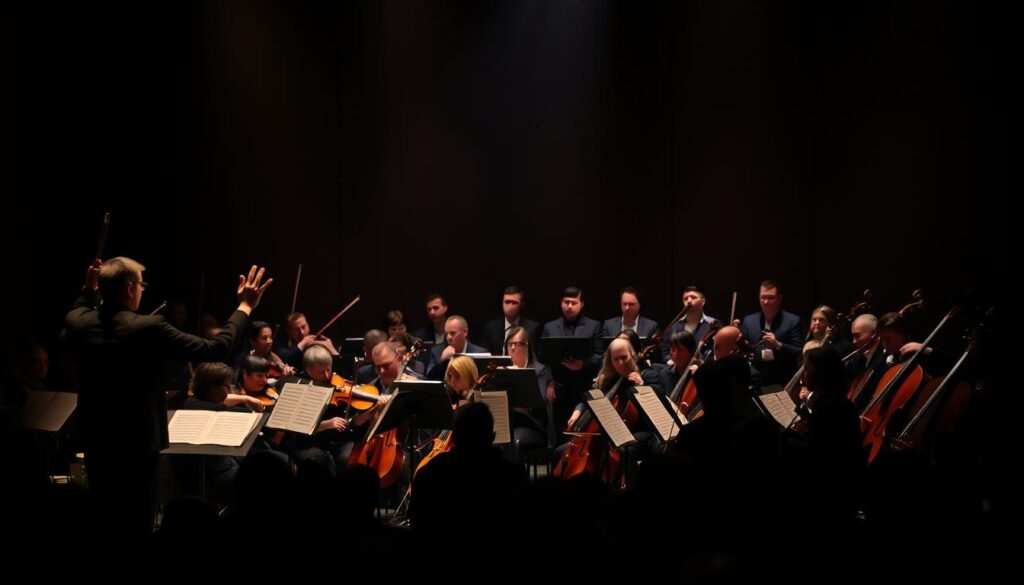
Vocal harmony is a special part of music. It’s about blending voices to create a beautiful sound. To do this well, you need to know music theory. When voices come together right, a simple tune can become something amazing.
Creating harmony means picking notes that sound good together. This comes from knowing about chords and scales, which are core to music theory. Musicians use these skills to make music that’s not just heard, but felt.
In short, harmony makes music more than just a tune. By learning music theory and how to blend voices, we can enjoy the full beauty of harmonious music.
The Evolution of Group Harmony Through History
Group harmony has changed a lot over time. It was shaped by different cultures and music trends. The history of harmony shows how music keeps evolving.
In ancient times, harmony was linked to religion and ceremonies. As music grew, so did singing in harmony. Each culture developed its own way of harmonizing.
The choir history began with the rise of music schools in the Renaissance. This time saw more complex harmonies and famous choirs.
Over the years, group harmony kept changing. It was influenced by new music styles and technology. Today, harmony singing is a big part of music, with many styles adding to the history of harmony.
Types of Vocal Harmony in Group Settings
In group settings, vocal harmony is more than one thing. It’s a mix of different styles and techniques. Using various vocal harmony types can make the sound richer and more engaging.
The traditional four-part harmony is common in choirs. It divides singers into soprano, alto, tenor, and bass parts. Each part adds something special to the harmony, making the sound balanced and cohesive.
Harmony vocals or secondary melodies are also used. They add depth and complexity to the main melody. This technique is popular in group singing harmony.

Today, group singing often tries new and innovative ways to use vocal harmony. This includes extended vocal techniques like beatboxing or vocal percussion. These add a dynamic and textured sound to the music.
The choice of vocal harmony type depends on the music and the sound wanted. By using different types of vocal harmony, groups can make a unique and captivating sound. This enhances their performance.
Building the Foundation for Group Harmony
Creating stunning group harmony starts with a strong foundation. This means developing good singing techniques and grasping music theory basics.
Singers should work on their vocal skills through practice and training. They need to improve pitch accuracy, tone quality, and breath control. Proper breathing techniques are key for a steady tone and supporting harmonies.
Knowing music theory is also vital. Singers should understand chord progressions, scales, and rhythm. This knowledge helps them identify their part within the harmony and make necessary adjustments.
By mixing good singing techniques with music theory knowledge, groups can build a solid harmony foundation. Regular choir practice focusing on these areas will lead to more unified and beautiful performances.
Practical Techniques for Achieving Perfect Harmony
Singing in harmony is a skill that can be developed with practice and the right training. To achieve perfect harmony in group singing, you need both individual skill and practice together. Singers must work on their vocal abilities and learn to blend their voices with others.
Individual Pitch Training Methods are key for harmony singing. Techniques like pitch recognition exercises and vocal warm-ups help singers get better at producing accurate pitches. Regular practice of these exercises can greatly improve a singer’s harmony skills.
Individual Pitch Training Methods
Individual pitch training includes exercises like scales, arpeggios, and melodic patterns to improve pitch accuracy. Singers can also use technology, such as pitch correction apps, to help with their training.
Group Tuning Activities
Group Tuning Activities help singers blend their voices with others. Activities like singing in rounds, harmonizing in small groups, and tuning exercises improve group harmony. These activities help singers develop their listening skills and adjust their pitch to match the group.
To enhance harmony, singers can do singing exercises that focus on blending voices. Techniques like singing in unison, then adding harmonies, help a group sound cohesive. 
By combining individual pitch training with group tuning activities and singing exercises, singers can achieve perfect harmony. Regular practice and dedication to these techniques lead to a more harmonious and enjoyable singing experience.
Overcoming Common Challenges in Group Harmony
Singing in a group can face several challenges. Issues like pitch problems, balance difficulties, and blending challenges make it hard to sound cohesive.
Pitch Issues are a big problem in group harmony. To fix pitch issues, all members must sing in tune. Regular pitch training exercises boost the group’s pitch accuracy.
Balance Problems happen when some voices are too loud. To solve this, practice singing with different volumes. Use microphones and audio equipment to balance the sound during shows.
Blending Difficulties occur when voices don’t mix well. To improve blending, work on a unified vocal technique. Regular practice together helps create a cohesive sound.
Understanding and tackling these common challenges can enhance group harmony. Regular practice, patience, and teamwork are essential. They help overcome group harmony issues and achieve a beautiful sound.
The Social and Emotional Benefits of Harmony in Group Singing
Singing in harmony with others can deeply impact our social and emotional health. When we sing together, we form a strong bond. This bond makes us feel more connected and part of a community.
One key social benefit of harmony singing is teamwork. Singers must listen and adjust to create a unified sound. This teamwork builds unity and cooperation among group members.
Harmony singing also has many emotional benefits. It lets us express our feelings through music. This can be very helpful for those dealing with stress or anxiety.

“The most important thing in singing is not the voice, but the spirit with which it is used.”
This quote shows the true power of harmony singing. It brings people together and lifts their spirits.
The harmony singing advantages go beyond just singing. They help us feel better and happier. By singing together, we build stronger social bonds and improve our emotional health.
Famous Examples of Exceptional Group Harmony
History is filled with famous harmony groups that have shown the beauty of singing together. These groups have amazed people all over the world. They have also helped music grow and change.
Barbershop Quartets and Traditional Harmony
Barbershop Quartets and Traditional Harmony
Barbershop quartets are known for their unique four-part harmonies. Groups like theFour Acesand thePlattersare famous for this. They show the beauty of close harmonies in barbershop music.
Pop and rock music have also seen great harmony groups. Bands likeThe BeatlesandThe Beach Boysled the way. They added complex harmonies to their songs, inspiring many others.
Contemporary A Cappella Ensembles
Contemporary A Cappella Ensembles
Today, a cappella groups likePentatonixandStraight No Chaserare very popular. They are known for their creative songs and perfect harmonies.
These groups show the wide range of harmony in music. They highlight the skill and hard work needed for such perfect singing together.
Bringing Harmony Into Your Musical Journey
Adding harmony to your singing can make your music more meaningful. It brings depth and emotion to your performances. Learning harmony singing techniques can improve your musical experience.
To start, practice with a group or find a harmony partner. Try different tips, like listening to the melody and finding notes that go well together. This will help you get better at harmony singing.
Remember, mastering harmony singing takes time and effort. Be patient and stay committed. Enjoy the journey of creating harmonies that make your music richer and connect you with others.