

Finding peace in today’s fast world is tough. Mindfulness helps us find calm and clarity. Thich Nhat Hanh says it’s a special energy that comes from being in the moment.
Mindfulness means being fully present, aware of our thoughts, feelings, and body sensations without judging. We can improve this by doing breathing exercises and meditation. These help us stay focused.
Adding these practices to our daily lives can help us handle stress better. It can also make our lives more balanced and fulfilling.
The Power of Present Moment Awareness
Mindfulness, based on present moment awareness, offers many benefits for both body and mind. It helps people reduce stress and anxiety, leading to better overall well-being.
The Mayo Clinic Staff says mindfulness meditation can cut down stress and anxiety. It focuses on the present moment. This lets people notice their thoughts and feelings without judging, helping them stay mentally balanced.
Mindfulness helps us connect more deeply with our current experience. It brings calm and clarity. Regular practice can greatly improve mental health, making it a key tool for managing stress and improving life quality.
Adding mindfulness to daily life helps people face challenges with grace and strength. The power of being in the present moment is simple yet effective. It offers a clear path to a more mindful and less stressful life.
The Science of Mindfulness: What Researchers Have Discovered
The scientific world is diving deep into how mindfulness affects our bodies and minds. Studies show that mindfulness meditation can greatly improve our well-being.
Stress Reduction and Cortisol Levels
Mindfulness practices help lower cortisol levels, which means less stress. The Mayo Clinic Staff found that regular mindfulness meditation can lower cortisol. This leads to a calm and relaxed state. Reducing stress through mindfulness boosts our health and happiness.

Mindfulness also boosts improved cognitive function. It trains the mind to stay in the present, improving focus and mental clarity. Research shows that regular mindfulness practice enhances cognitive flexibility and problem-solving skills.
The benefits of mindfulness on our minds are vast, making us sharper and more resilient. As research digs deeper, it’s clear that adding mindfulness to our daily lives can greatly improve our mental and physical health.
Fundamentals of Mindful Breathing
Mindful breathing is key in meditation, helping us relax and find peace. Thich Nhat Hanh, a mindfulness expert, says it brings us back to the present. This helps us relax and become more aware.
To start, find a quiet spot to sit or lie down. Close your eyes and breathe slowly, feeling the breath move in and out. If your mind drifts, gently bring it back to the breath without judging.
Mindful breathing offers many benefits. It can lower stress and anxiety, improve focus, and bring calm. Adding it to your daily routine helps you face life’s challenges with clarity.
Mindful breathing is simple yet powerful. You can do it anywhere, anytime. As you get better at it, you can use it in your daily life, improving your overall well-being.
Spending a few minutes each day on mindful breathing can deepen your relaxation and awareness. This practice not only helps you but also makes your community more mindful and compassionate.
Starting Your Mindfulness Journey
The journey to mindfulness starts with a single, mindful breath. The Mayo Clinic Staff says starting a mindfulness practice is easy. Just spend a few minutes each day on meditation or deep breathing. This can help you live more mindfully every day.

To begin your mindfulness journey, find a quiet, comfy spot. Sit there without distractions. Start with short sessions, like a few minutes a day. Then, as you get used to it, you can sit longer.
Keeping up a mindfulness practice takes time and effort. Try to make it part of your daily routine. For example, do it right after waking up or before bed. Paying attention to your breath and the now can really improve your life.
As you keep going on your mindfulness journey, you might notice it changing other parts of your life. It can make you less stressed, more focused, and calmer.
Essential Mindfulness Breathing Techniques
Thich Nhat Hanh’s teachings on mindful breathing are deep and meaningful. They help us live more mindfully. By using his techniques, we can find peace and awareness every day.
One key technique is to focus on the breath as it moves in and out of our body. This practice, called “following the breath,” keeps our mind in the present. As “breathing in, I calm my body; breathing out, I relax”, we learn to notice our breath and how it helps us relax.
“Breathing in, I calm my body. Breathing out, I relax.”
Another method is counting our breaths. Counting each breath cycle (inhale and exhale) helps us stay focused. It’s great for beginners because it’s easy to follow.
Mindful Breathing in Daily Activities makes everyday tasks mindful. For instance, taking a few mindful breaths before answering an email or during a work break can lower stress.
Diaphragmatic or belly breathing is also effective. It means breathing deeply into the belly, not just the chest. This kind of breathing can slow our heart rate and help us relax.
Using these mindfulness breathing techniques daily can change our lives. It can make us less stressed, more focused, and calmer.
Bringing Mindfulness Into Everyday Life
Mindfulness can make our daily routines more present and aware. It’s not just for meditation; it can be part of daily life. This makes our lives better overall.
The Mayo Clinic Staff says mindfulness practices can be used in simple tasks like eating, walking, and resting. For example, eating mindfully means enjoying each bite. You focus on the flavors, textures, and smells of your food. This turns eating into a special experience.
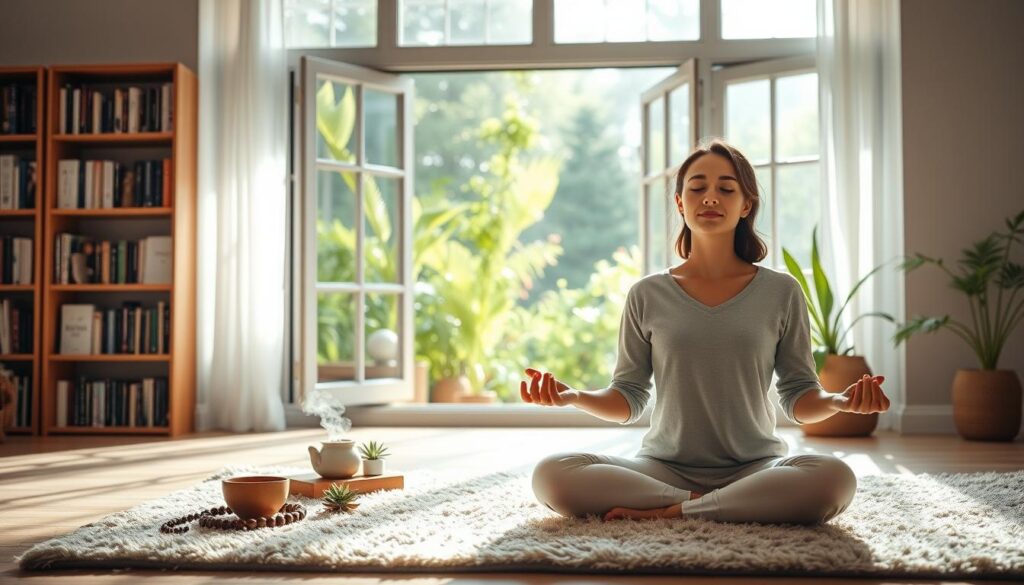
Walking can also be a mindfulness practice. You pay attention to how each step feels, your breathing, and what’s around you. This can lower stress and make you feel more connected to the world.
Adding mindful living to our daily routines doesn’t take extra time. It’s about being more aware and present in what we do. This way, we can find mindfulness in everyday tasks. It makes life more balanced and fulfilling.
When we start using mindfulness practices in our daily lives, we notice big changes. We become more aware of our thoughts, feelings, and body. This helps us react to things more thoughtfully, not just on impulse.
Overcoming Obstacles on Your Mindfulness Path
Meeting obstacles is a normal part of starting a mindfulness practice. Thich Nhat Hanh said it’s common to face issues like a wandering mind or trouble staying consistent.
One big mindfulness obstacle is when your mind wanders. If you catch your mind drifting, just acknowledge it and come back to your breath. Do this without judging yourself.
Meditation challenges can also come from feeling uncomfortable or restless. To solve this, find a comfy position or try guided meditations. Another challenge is staying consistent. Setting a regular time for meditation, even if it’s just a few minutes, can help make it a habit.
Remember, mindfulness is a journey, not a goal. Being patient and kind to yourself is key when facing meditation challenges. With regular effort, you can get past these obstacles and grow your mindfulness practice.
Seeing obstacles as a natural part of the journey helps. This way, you can learn and grow from them. It makes your practice stronger.
Mindfulness for Challenging Life Situations
In times of stress, mindfulness offers a calm pathway. It’s great for tough times, like before sleep or when waking up, as the Mayo Clinic Staff says. By adding mindfulness to your daily life, you can handle life’s hard parts better.
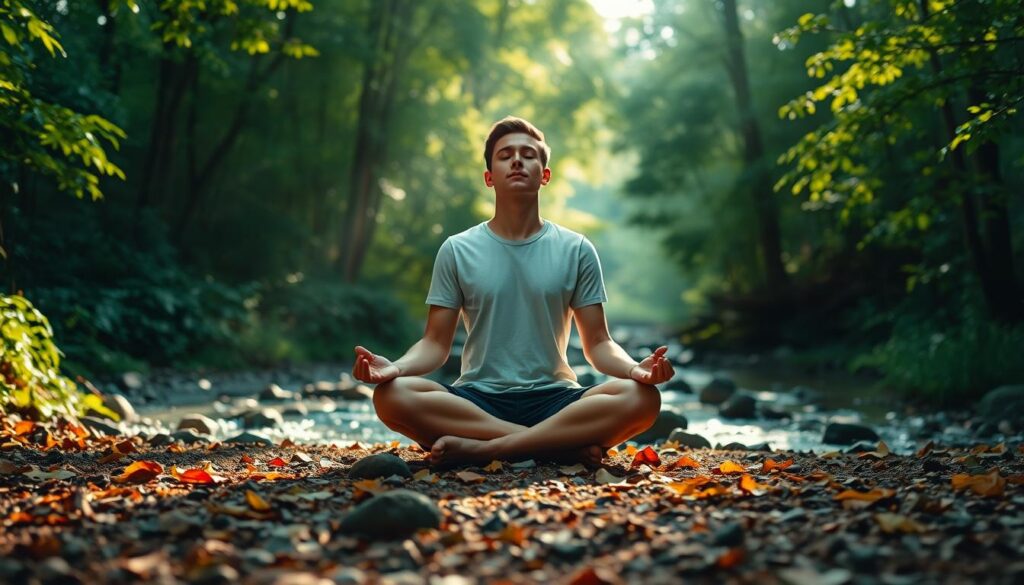
Mindfulness is more than a practice; it’s a way of being. It can change how we deal with tough situations. Being mindful can lower stress and anxiety, making life more peaceful.
Pre-Sleep Breathing Rituals
Starting a breathing ritual before bed tells your mind and body it’s time to relax. Deep, slow breaths calm your nervous system, readying you for sleep. Sit comfortably, close your eyes, and focus on your breath, releasing tension with each breath.
“The breath is the bridge between the body and the mind.”
Middle-of-Night Calming Techniques
Waking up in the night can be scary. But, mindful breathing techniques can calm your mind and help you sleep again. Focus on the breath’s movement or use a soft mantra to guide you back to calm.
Adding these mindfulness practices to your life makes facing challenges easier. As you grow in mindfulness, managing stress and finding calm becomes simpler, even in tough times.
Deepening Your Mindfulness Practice
Mindfulness is a journey, not a final goal. Thich Nhat Hanh said it’s about growing through practice and trying new things. It’s about keeping up the effort.
Exploring different meditation techniques is key. You might try body scan, loving-kindness, or guided meditation. Each one helps you grow in mindfulness.
Being consistent is also important. Set a time each day for mindfulness. This makes it a habit, helping you grow and become more mindful.
Reflecting on your mindfulness journey is helpful too. Writing in a journal or talking to others can give you new ideas. It makes your practice better.
“The seed of suffering in you may be strong, but don’t wait until you have no more suffering before allowing yourself to be happy.” –
Seeing things this way can really help you grow in mindfulness. It brings peace and understanding into your life.
The Ripple Effect: How Your Breath Changes Your World
Mindfulness is more than a personal journey; it changes the world around us. Thich Nhat Hanh says it transforms us and the world we live in.
Starting with mindfulness, we see a change in ourselves that affects others. Our kindness and thoughtful responses make the world a better place. This shows how mindfulness can have a big impact on our world.
As we grow in mindfulness, we become sources of calm and understanding. Our mindful breathing and presence can touch many lives. By choosing mindfulness, we change our lives and help create a more peaceful world.