

Feeling like you belong is a basic need for all of us. It means being accepted and valued by others. Philip, a young boy with Down’s syndrome, shows how powerful this feeling is.
Philip joined a Sunday school class, but the members were unsure at first. Yet, as time went by, they started to embrace Philip’s special qualities. He became a key part of their group.
This change not only improved Philip’s life but also the lives of others. They learned about the value of social inclusion and the beauty of diverse group dynamics.
What Does Belonging Mean to Us?
The sense of belonging is a basic need for humans. It’s more than just being in a group. It’s about feeling connected, sharing moments, and being accepted for who we are.
For people in group homes, making friends can be hard. This is because of social isolation and not being part of the community.
Belonging is linked to our social connections. The friendships we make and keep are key to feeling like we belong. When we feel understood and heard, we know we’re part of something.
The role of community is huge here. A supportive community helps our social connections grow. It gives us a sense of safety and acceptance.
To promote belonging, we need to create chances for people to meet and connect. We should also make sure places are welcoming to everyone. This way, we can help people in group homes feel valued and connected.
Personal Experiences That Foster Belonging
Belonging is a basic need for all humans. Personal stories show how deep this need is, even when things are tough. For those in group homes, finding a sense of belonging can be really hard.
One person’s story from a group home is very telling. At first, they felt alone, with differences in background and interests making it hard to connect. But, through doing things together and working as a team, they started to feel part of a community.
“The sense of belonging comes from being accepted for who you are, without condition,” said a resident, reflecting on their experience. This sentiment shows how acceptance and understanding are key to feeling at home.

As people helped each other through tough times, resilience became a shared trait. This resilience helped them deal with their problems and made them feel more connected to the group.
Stories like these show how shared experiences build community. By facing and beating challenges together, people grow closer. This creates a stronger sense of belonging.
These experiences do more than just help individuals. They make the whole community stronger and more supportive. As belonging experiences grow, they build a resilient and connected group. Here, everyone feels valued and understood.
The Importance of Shared Interests
Shared interests are key to unity, bringing people together in meaningful ways. When people join group activities that match their hobbies, they form lasting bonds.
Being part of group activities makes people feel they belong. It also helps them meet others with similar interests. As Walt Disney said, “The way to get started is to quit talking and begin doing.”
Starting to join a group or club related to your interests can be very rewarding.
Activities That Unite
Many activities can bring people together, like sports, cultural events, and volunteer work. These activities help people connect over shared interests, starting the process of bonding.
For example, joining a book club or a hiking group lets people share their experiences. They connect with others who have similar interests. This can lead to deep relationships and a stronger community sense.
In summary, shared interests are vital for feeling a sense of belonging. By participating in group activities, people can unite, form connections, and strengthen their sense of unity.
The Impact of Technology on Belonging
Technology is a mixed bag for belonging, bringing both chances to connect and risks of feeling alone. On one side, online communities let people find others with similar interests, no matter where they are.
Social media and forums help people join groups based on their hobbies. This creates a feeling of belonging among members. They can share thoughts, get support, and talk about things they might not in real life.
But, social media also has its downsides. It can lead to comparing oneself to others, bullying online, and false information. These issues can make people feel left out, anxious, and less confident, hurting their sense of belonging.
The quality of online interactions varies a lot. Some online groups build deep, meaningful relationships. Others lack the closeness found in face-to-face meetings.
To get the most out of technology for belonging, balance online and offline interactions. Use technology to connect, then meet in person. This way, people can strengthen their connections and feel more at home.
In the end, technology’s impact on belonging depends on how we use it. Being aware of its good and bad sides helps us use it to build stronger, more meaningful relationships and a greater sense of belonging.
Overcoming Barriers to Belonging
Breaking down barriers to belonging is key to a more inclusive and diverse community. It means spotting and tackling the social barriers that stop people from feeling they belong.
Philip’s story with the Sunday school class shows how barriers can be overcome. By welcoming diversity and pushing for inclusion, Philip found common ground with others despite their differences.
Removing social barriers takes hard work and commitment. It’s about making space for people to meet, share, and see things from each other’s viewpoints.
Creating a space where everyone feels valued and respected is essential. This boosts their sense of belonging and adds to our communities’ richness with varied views and skills.
In summary, overcoming barriers to belonging is a team effort. We must actively support diversity and fight against social barriers that block our connections with others.
How Belonging Shapes Our Identity
The link between belonging and our identity is deep and complex. Feeling like we belong can greatly boost our self-image. It changes how we see ourselves and our role in the world.
Being part of a group or community gives us a sense of security and validation. This can shape our identity. For example, being in a tight-knit community can make us feel proud and valued. It affects how we see ourselves and what we think we can do.
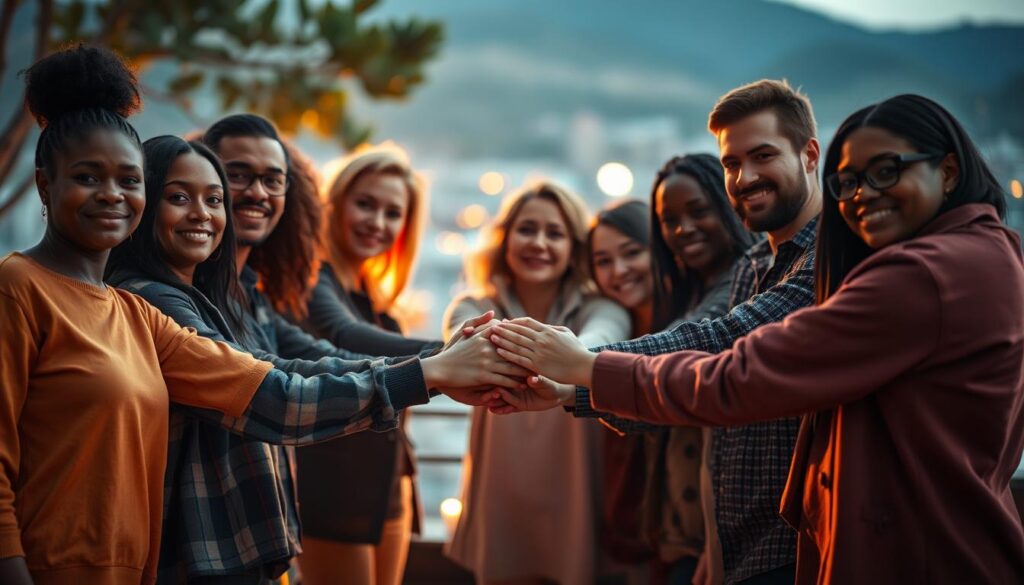
Our experiences in the groups we belong to shape our self-concept. Good experiences can make us feel better about ourselves. Bad experiences can make us feel isolated or doubt our worth.
The relationship between belonging and identity is always changing. As we move through different social settings, our sense of belonging can change. This change can deeply affect our identity. For instance, someone might feel very connected at work but different at home.
It’s key to understand this dynamic to build a strong sense of identity. By seeing how important belonging is, we can create spaces where everyone feels included. This helps shape their identity in a positive way.
Stories of Belonging in Different Cultures
Different cultures have their own stories of belonging. These stories help us understand community better. In many Indigenous cultures, belonging is closely linked to the land and ancestry. This connection to heritage and stories passed down through generations creates a strong sense of cultural belonging.
In contrast, in more individualistic societies, belonging might be tied to shared interests or activities. For example, communities formed around hobbies or passions can create a strong sense of camaraderie. As Aristotle once said, “Man is by nature a social animal; an individual who is unsocial naturally and not accidentally is either beneath our notice or more than human.”
“The way we experience belonging can vary greatly from one culture to another, reflecting the diverse ways humans form connections.”
The role of community is key in fostering a sense of belonging. In many cultures, community events and rituals are important. For example, cultural festivals celebrate heritage and strengthen community ties. This shows the importance of diverse cultures in shaping our experiences of belonging.
Understanding these diverse stories of belonging helps us appreciate the complexity of human connections. It shows us the various ways community is formed and maintained across cultures.
The Role of Leadership in Fostering Belonging
Effective leaders know that making a place feel inclusive is key. This helps team members feel good and work better. By focusing on inclusion and community building, leaders help team members feel like they belong.
Leaders can make their teams feel included by talking openly, valuing different views, and celebrating each person’s role. A leader who listens well and responds thoughtfully makes a big difference in team spirit.
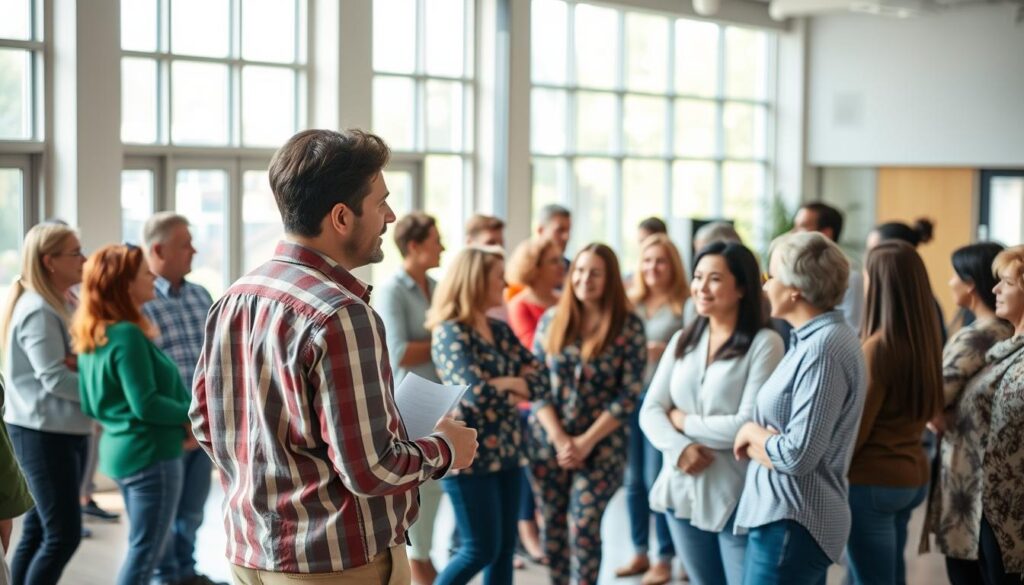
Building a community is also vital for team belonging. Leaders can do this by planning team activities, creating a culture of kindness and respect, and making sure everyone feels important and supported.
Using these methods, leaders can make a place where everyone feels they belong. This leads to happier workers, better teamwork, and higher performance. The role of leadership in making people feel at home is very important for any team’s success.
Celebrating Belonging Through Events
Community events are powerful because they create shared experiences. These experiences help us feel like we belong. When we celebrate together, we form strong bonds with others.
Community events give us a chance to connect with each other. They bring us together, making us feel united and cooperative. Events like cultural festivals, charity runs, or neighborhood potlucks help us feel part of something bigger.
Celebrations make us feel seen and valued. They give us a break from our daily lives. By joining in community celebrations, we feel a stronger connection to our community.
These events also help bridge gaps between different groups. They promote understanding and empathy. This way, everyone feels included and valued in their community.
In short, celebrating belonging through events strengthens our community bonds. It’s a chance to share joy, connect, and make our communities stronger.
Recognizing Signs of Belonging and Exclusion
The story of Philip and the empty egg shows how important feeling included is. It shows how a small action can make someone feel part of the group or left out.
It’s key to know the signs of belonging to make everyone feel welcome. When people feel they belong, they join in more and get involved. You can see this in how they act and how much they participate.

But, exclusion can sneak up on us and hurt a lot. It’s often shown by people ignoring or avoiding someone. Spotting these social cues helps us see when someone feels left out.
To be more welcoming, we need to catch these signs and act. For example, trying to include everyone in talks or activities makes them feel more connected.
By paying attention to signs of belonging and exclusion, we can make our community more open and friendly. This helps everyone and makes our community better for all.
The Future of Belonging in Our Evolving Society
In today’s changing world, understanding belonging is key to stronger communities. As our values and norms shift, how we belong is changing deeply.
The future of belonging is closely tied to our communities’ social evolution. With new tech and changing people, what we mean by community is evolving. This change brings both chances and hurdles for feeling at home.
Technology plays a big role in the future of belonging. It can bring people together, but it can also make us feel alone. So, we must use tech to bring us closer, not further apart.
Work and play are also changing. With more remote jobs, our work communities are shifting. And how we spend our free time affects our social ties. It’s important to grasp these shifts to help people feel part of a group.
To keep up, communities should be welcoming and diverse. They can host events, back local projects, and encourage talks between different groups. This helps everyone feel connected.
In the end, how we belong will depend on our ability to grow with society while keeping our need for connection. By tackling this, we can create stronger, kinder communities for tomorrow.
Conclusion: Embracing Our Place in the World
As we go through life, finding where we belong is key to growing. Being part of a global community lets us share stories, learn, and feel united. It’s a powerful way to connect with others.
Supporting each other strengthens our relationships and makes society better. Feeling like we belong changes lives. It helps us be true to ourselves and dream of a better tomorrow.
Looking ahead, we must see our worth in the global community. Embracing our unique qualities and our shared humanity is important. This way, we can build a world where everyone is valued and heard.