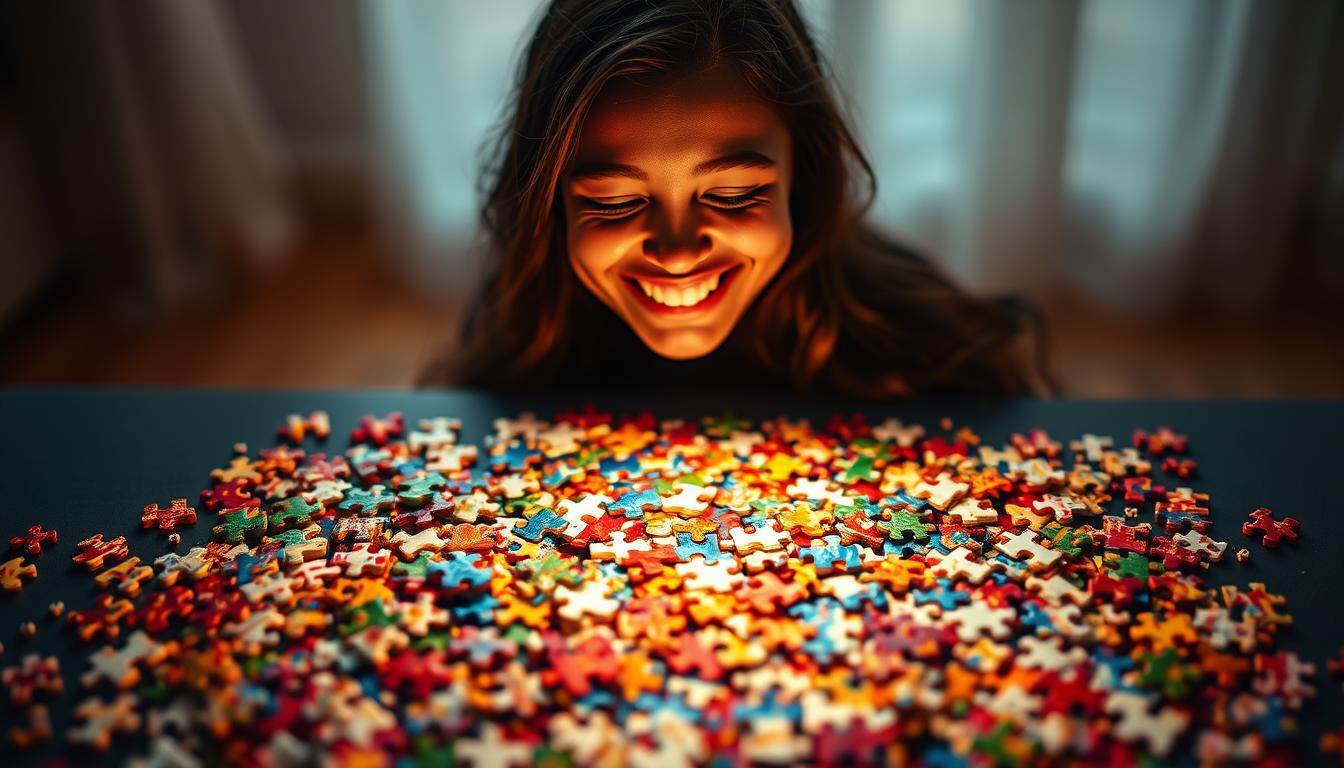
After making my Irish breakfast tea, I check my email and join my favorite Discord groups. Then, I dive into the Washington Post crossword. This daily routine gives me structure and excitement.
For me, solving puzzles is more than a hobby. It’s a journey that fills me with satisfaction. The rush of euphoria when I finish a tough puzzle is amazing. It’s a mix of joy, focus, and determination.
Puzzles make my day more interesting, turning simple tasks into fun challenges. Solving them keeps my mind sharp and gives me a sense of achievement. This leaves me feeling euphoric and fulfilled.
“The Allure of Puzzles in Modern Life”
Puzzles in modern life are both challenging and relaxing. They are a favorite in many homes, providing a fun way to enjoy free time.
The Universal Appeal Across Generations
Puzzles attract people of all ages, from kids to seniors. They come in many types, like jigsaw puzzles, crosswords, and logic puzzles. This variety meets different interests and skill levels. A puzzle fan notes, “Puzzles are a great way to spend quality time with family and friends.”
“I love how puzzles bring us together, creating a sense of accomplishment when we finish them.”
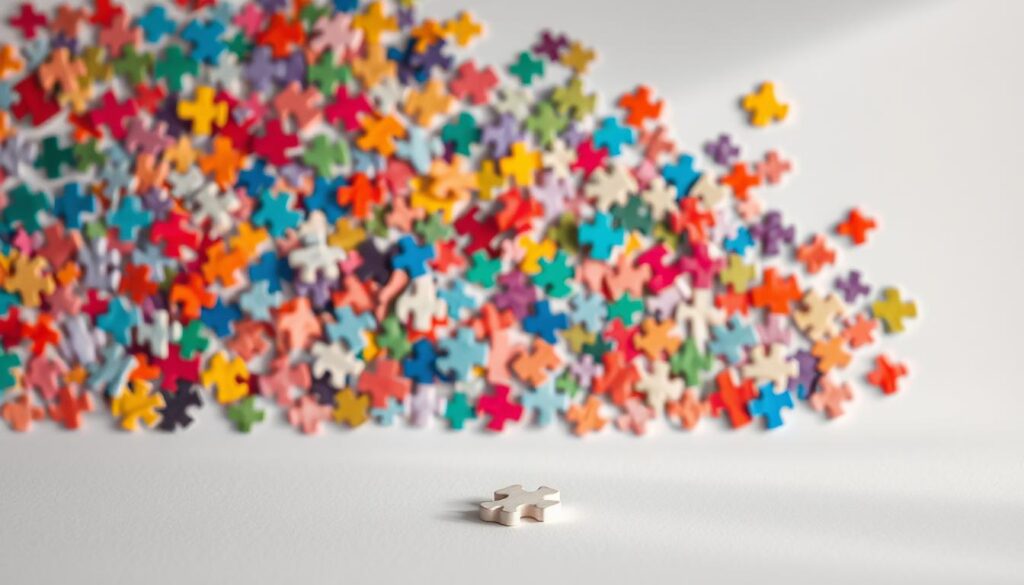
In today’s digital world, puzzles have changed, using technology to improve the experience. Online puzzle sites and mobile apps make puzzles easy to find and play. Recent puzzle trends show a big increase in digital puzzles. These offer relaxation and fun anytime, anywhere.
The move to digital puzzles has brought new features, like timers and leaderboards. This adds excitement to solving puzzles. As people look for relaxation in their busy lives, puzzles are a top choice. They offer a peaceful break from daily stress.
“The Psychology Behind Puzzle Solving”
Puzzle solving offers many benefits, from better thinking to feeling happier. It makes our brains work harder, improving our thinking and mood.
Memory Enhancement and Pattern Recognition
Puzzles help improve memory by making us remember shapes, colors, and patterns. This exercise boosts memory and helps us spot patterns better. These skills are key for solving problems in our daily lives.
When we solve puzzles, we get better at seeing patterns. This skill helps us in many areas, like spotting trends or understanding complex systems.
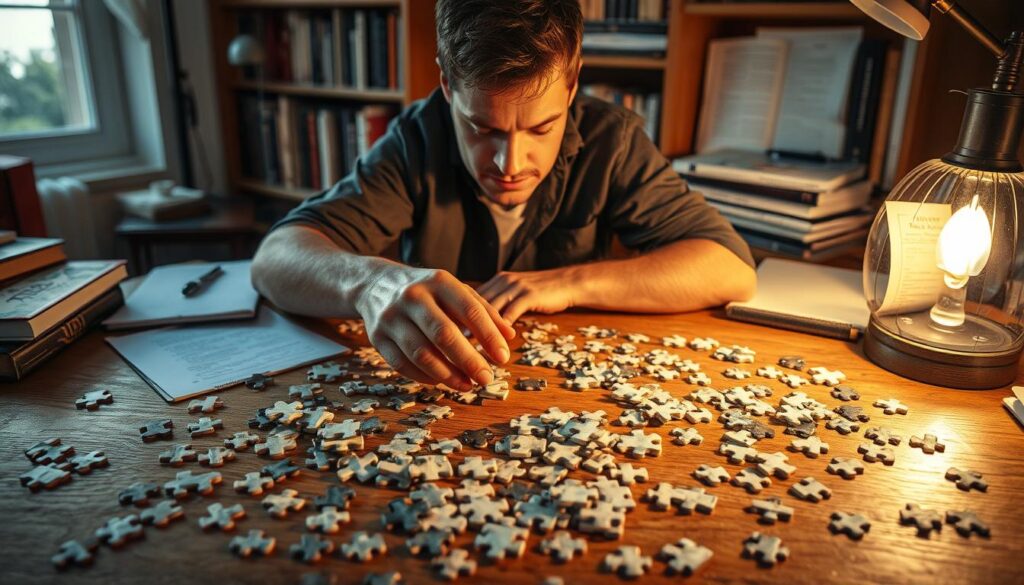
Puzzle solving also helps with emotional growth, like being more patient and persistent. It teaches us to keep going even when it’s hard. This mindset helps us grow in many ways.
Finishing a puzzle makes us feel proud and boosts our confidence. It motivates us to take on even tougher challenges. This feeling of success is a big part of why puzzles are good for our minds.
By doing puzzles, we can see these benefits for ourselves. It improves our mental health and problem-solving skills.
“The Journey from First Piece to Last”
Puzzle solving is more than just finding the right pieces. It’s about creating a puzzle solving strategy that keeps you going. Whether it’s a jigsaw puzzle, crossword, or brain teaser, a clear plan makes a big difference.
Organizing Your Approach
Start by organizing your workspace. A clean area helps you focus. Many people sort their puzzle pieces by color, shape, or texture. This methodical approach speeds up solving and makes it more fun.
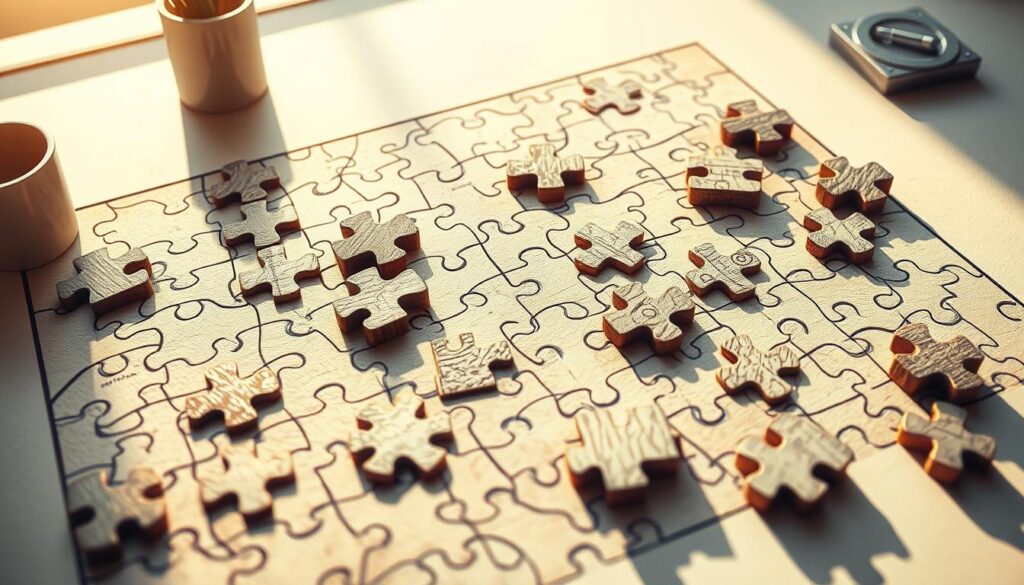
Begin with the edges or the easiest parts of the puzzle. This gives you a sense of accomplishment early on. For jigsaw puzzles, start with the edge pieces to create a frame. This makes the puzzle less overwhelming.
Pushing Through When Motivation Wanes
Motivation can drop when puzzles get tough. Taking a break can help. Stepping away lets you come back with fresh eyes. Some people work on another section or switch puzzles to stay motivated.
Persistence is essential to finish a puzzle. Remembering the joy of finishing can keep you going. Sharing your progress with friends or family adds motivation, making it a shared experience.
With a well-organized approach, persistence, and the right mindset, you’ll enjoy the journey. You’ll appreciate the process and the achievement of completing it.
“That Moment of Pure Euphoria”
Finishing a puzzle can make you feel incredibly happy and fulfilled. This feeling is more than just being done. It’s a mix of brain and mind reactions.
Dopamine Release and Satisfaction
When you solve a puzzle, your brain releases dopamine. This chemical is linked to joy and rewards. As you get closer to finishing, the excitement grows. This makes you feel even more satisfied.
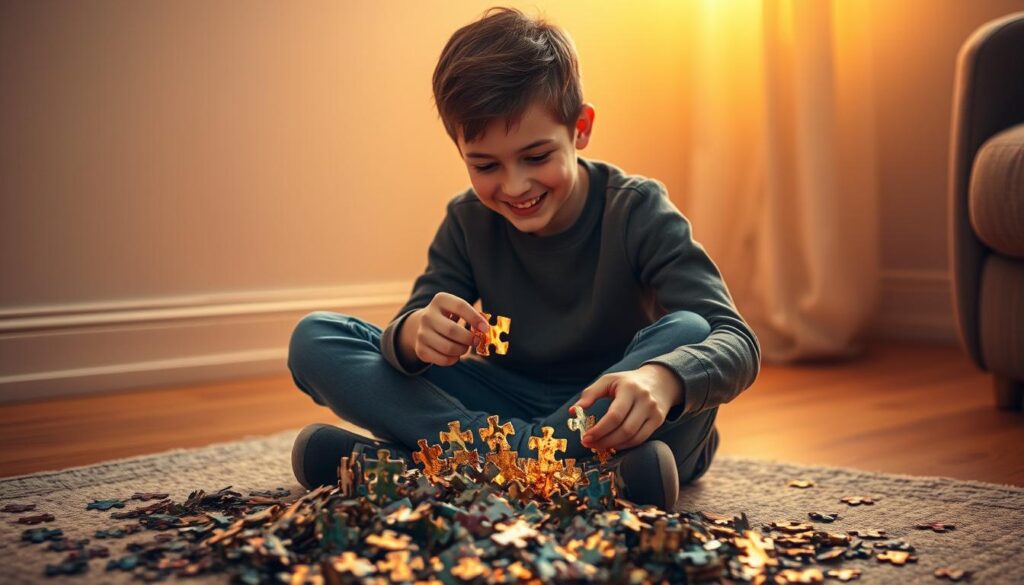
Remembering the moment you finish a tough puzzle is special. It’s a burst of euphoria after all your hard work. This feeling is so strong it makes you want to solve even harder puzzles.
The mix of dopamine release and feeling accomplished gives you satisfaction. This feeling doesn’t just stop when you finish. It stays with you, making you feel fulfilled for a long time.
“Different Types of Puzzles and Their Unique Satisfactions”
Puzzles come in many forms, like jigsaw and crossword puzzles. They appeal to different tastes and offer a mental challenge. Solving them brings a sense of accomplishment.
From Simple to 10,000 Pieces
Jigsaw puzzles range from simple 100-piece puzzles for kids to complex 10,000-piece puzzles for experts.
Completing a jigsaw puzzle is rewarding. It’s the joy of putting pieces together to create something you can see and touch.
Crossword puzzles, on the other hand, test your brain. They require solving words based on clues. They’re available in many levels, appealing to many.
The thrill of solving a crossword puzzle comes from the mental battle. It’s the feeling of triumph when you solve the last clue.
Tactile Satisfaction in Three Dimensions
3D puzzles offer a new level of challenge. They require thinking in three dimensions, making them more complex.
Assembling a 3D puzzle is unique. It involves handling physical pieces to build a three-dimensional object. This provides a special kind of satisfaction.
In conclusion, puzzles offer something for everyone. Whether it’s the hands-on fun of jigsaw puzzles, the brain workout of crosswords, or the three-dimensional puzzle of 3D puzzles. Each puzzle type brings its own satisfaction, making puzzle-solving a rich and varied hobby.
“Sharing the Joy: Social Aspects of Puzzle Completion”
Puzzles have a special way of bringing people together. They create moments and memories that last forever. Working on a puzzle can be a deeply social activity, building connections and strengthening bonds among family and friends.
Creating Traditions Around Puzzle Time
Many families and groups make traditions out of puzzle solving. It might be a weekly jigsaw puzzle night, a monthly challenge, or an annual holiday tradition. These shared experiences become something to look forward to, a ritual that combines fun, challenge, and quality time together.
For example, starting a puzzle on a Friday evening and finishing it by Sunday can become a cozy weekend tradition. It’s a time to relax, enjoy each other’s company, and share stories.
Beyond family and close friends, there’s a wider world of puzzle enthusiasts. Joining a puzzle community or club can be a great way to meet like-minded individuals who share your passion. These communities often organize events, competitions, and meetups, adding a new dimension to the puzzle-solving experience.
Whether online or in-person, being part of a puzzle community can enhance your enjoyment, provide inspiration, and offer a sense of belonging. It’s about sharing the joy of puzzle completion and the journey towards it.
By embracing the social aspects of puzzle solving, we not only enrich our own experience but also create lasting memories and connections with others. It’s a testament to the power of puzzles to bring people together, fostering a sense of community and shared joy.
“When Puzzles Become More Than a Hobby”
Puzzles are a favorite pastime for many. But for some, they turn into a serious competition. The world of competitive puzzle solving has grown a lot. Now, there are many championships and events that draw people from all over.
Championships and World Records
Competitive puzzle solving is now seen as a sport. The World Puzzle Championship is a top event. People compete in different puzzle categories, showing off their speed, accuracy, and problem-solving skills. The thrill of competition pushes them to get better, often setting new records.
“The competitive puzzle solving community is incredibly supportive,” said a seasoned competitor. “Everyone encourages each other to get better and push their limits.” This teamwork is what makes the community special, helping everyone grow and improve.
As people get better at solving puzzles, some start creating their own. The art of puzzle design needs a deep understanding of puzzle mechanics, creativity, and detail. Puzzle designers aim to make puzzles that are both tough and solvable, blending art and science.
Going from solver to designer deepens one’s love for puzzles. It also helps grow the puzzle culture. By making new puzzles, designers keep the hobby exciting for everyone.
In conclusion, puzzles can be more than just a hobby. Through competitions and puzzle design, enthusiasts can reach new levels. They join a community that shares their passion and pushes the limits of what’s possible.
“The Therapeutic Value of Puzzle Completion”
Puzzle solving is more than just a fun activity. It has therapeutic benefits like stress relief and better brain function.
Doing puzzles can put you in a state of complete focus, known as the “flow state.” This mental state brings high focus, enjoyment, and calmness.
Entering the Flow State
When you work on puzzles, you might enter this flow state. Here, your skills meet the challenge, and you’re fully into it. This state is not only fun but also helps with stress and worries.
Many find puzzle solving helps with stress and anxiety. For example, jigsaw puzzles are used in therapy for people with dementia. They help with brain stimulation and relaxation.
The stress relief from solving puzzles is a big benefit. It lets you temporarily forget daily worries, lowering stress.
In summary, puzzle solving offers many benefits. It helps with stress relief and reaching a flow state. It’s a great way to improve mental health and well-being.
“Taking the Puzzle-Solving Magic Into Real Life Challenges”
Puzzle solving skills are surprisingly useful in real life. They help us tackle complex problems with confidence. This is because they teach us to break down issues into smaller parts and find creative solutions.
These skills are very useful in everyday life. When we face big challenges, we can use the same approach we do with puzzles. This makes solving problems easier and more effective.
Using puzzle-solving skills in real life makes us better problem solvers. We become more methodical and analytical. This can lead to success in both our personal and professional lives.
Completing puzzles also boosts our confidence. This confidence motivates us to try new things and face challenges head-on. As we get better at puzzles, we become more resilient and adaptable in life.