
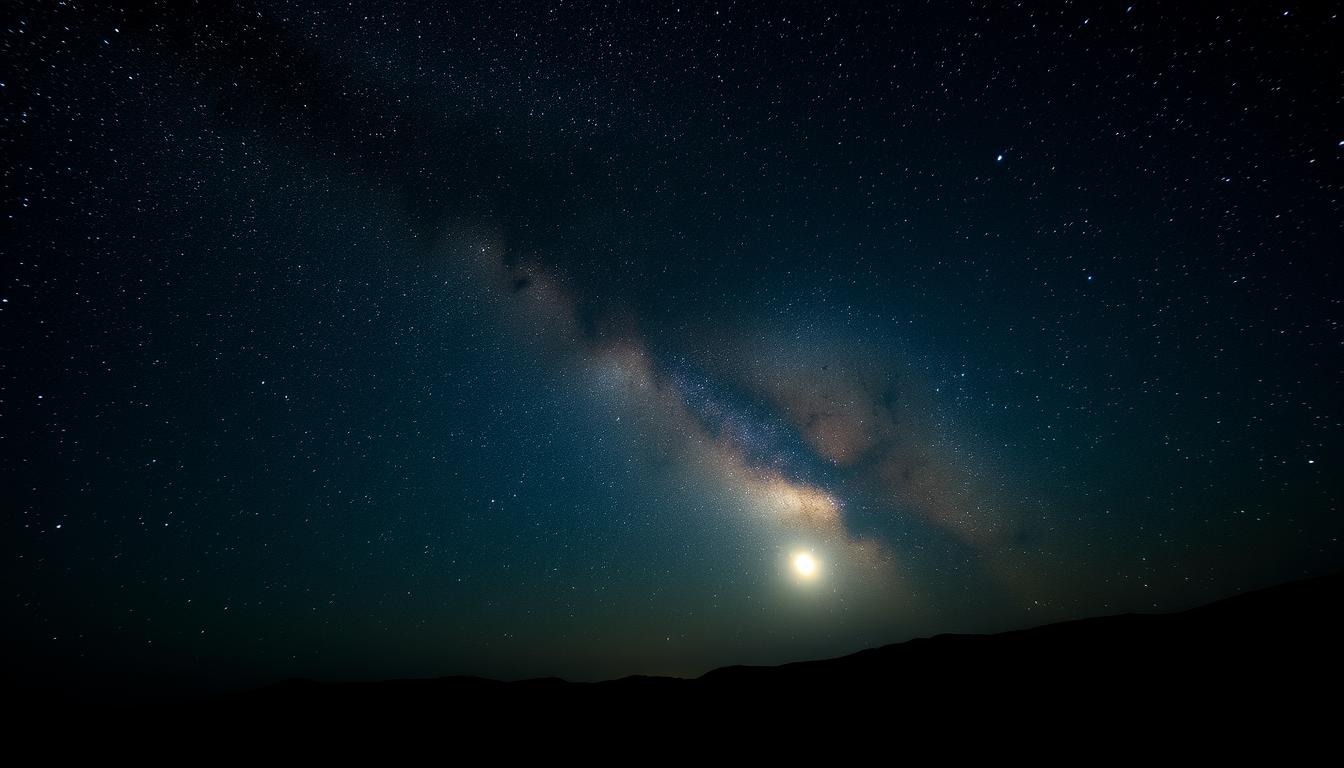
The night sky has always fascinated and inspired us. Our ancestors used the stars to navigate, sailing across oceans. They knew the heavens well.
They also created myths around the constellations. The night sky became a canvas of stories and legends. This connection is a big part of our history and culture.
Looking up at the night sky reminds us of the wonder beyond our daily lives. The stars sparkle like diamonds, making us think about the universe’s secrets.
Gazing Upward: Our Ancient Connection to the Stars
The night sky has been a canvas for our ancestors’ stories and maps. For centuries, stargazing has been a key part of human culture. It helped with ancient navigation and inspired myths.
Ancient Star Maps and Navigation
Our ancestors used the stars to navigate seas and deserts. They made detailed star maps to guide them. The Gregorian calendar, used by Westerners today, came from a lunar calendar. This shows how important stars were in organizing time and space.
Mythology Written in the Stars
The constellations are more than patterns; they tell many cultures’ myths and legends. Astronomy and mythology blended as our ancestors explained the universe through their gods’ stories. They left their cultural marks in the night sky.
Understanding the Vastness Above Us
The cosmos is like a vast ocean, filled with stars and galaxies. These celestial bodies are like islands in the sky. As we explore the night sky, it’s key to understand the universe’s scale.
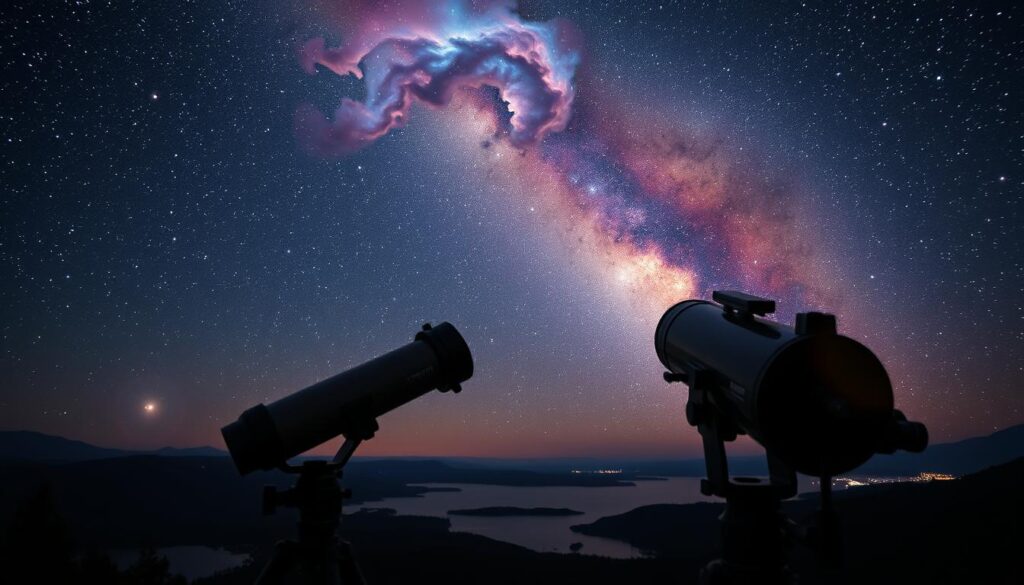
Astronomers have found ways to measure the huge distances between stars and galaxies. Measuring the universe is like unraveling a grand tapestry, thread by thread.
How Astronomers Measure Space
Astronomers use different methods to measure space. They use parallax measurement for nearby stars and supernovae observations for distant galaxies. This helps us grasp the universe’s scale and how it’s expanding.
The Observable Universe
The observable universe is what we can see, limited by how far light has traveled. It’s incredibly vast, filled with billions of galaxies and stars that light up the night sky.
By understanding the vastness above us, we can see the beauty and complexity of the night sky. This brings us a deeper sense of wonder and awe.
The Wonder of Celestial Objects
Exploring the night sky reveals many celestial objects that capture our attention. The universe is filled with stars, galaxies, and other wonders.
Stars, for example, vary in size and color. Each star has its own life story. Learning about these bodies helps us understand the universe’s growth.
The Life Cycle of Stars
Stars are born, live, and die over millions of years. The life cycle of a star depends on its mass. More massive stars live shorter lives. This is a key area of study in astronomy.
Different Types of Stars
There are many types of stars, like main-sequence stars and red giants. Each type shows a different stage in a star’s life. Studying these types helps us grasp the universe’s complexity.
Watching a meteor shower is a fun way to connect with the night sky. It’s a beautiful display that shows the universe’s vastness and beauty.
Studying celestial objects, like stars and galaxies, is a growing field. It helps us understand the cosmos and our place in it.
Our Solar System’s Marvels
When we look up at the night sky, we see the amazing variety of objects in our solar system. The solar system has many interesting bodies, like planets and comets. These offer great chances for stargazing.
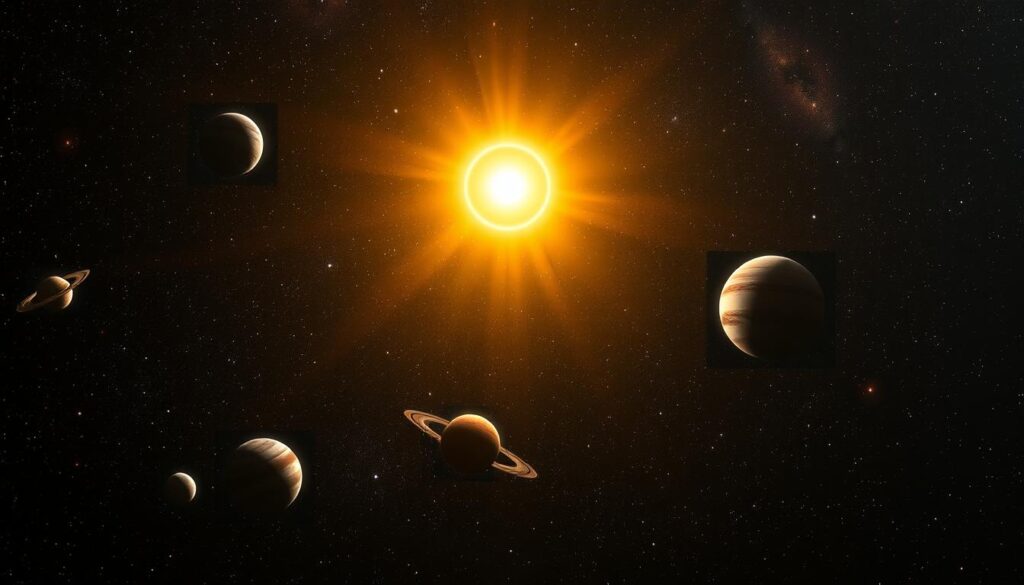
One of the best parts of stargazing is finding the planets in our solar system. With some knowledge and the right setup, we can see planets like Jupiter, Mars, and Venus. These planets are usually bright and can be seen without a telescope.
When Comets Visit Earth’s Vicinity
Comets are also amazing, and sometimes they come close to Earth. When they get near the Sun, they show bright tails that we can see from our planet. Seeing a comet is a special experience for stargazers.
The Moon is the brightest thing in the night sky. It’s less affected by light pollution than other things like the Milky Way or the Aurora. This makes it a great target for stargazing, even in places with a lot of light pollution.
Looking at the solar system through stargazing helps us learn more about the universe. It also fills us with wonder and awe. Whether we’re watching planets or seeing a comet, the night sky is full of wonders waiting to be found.
Spectacular Night Sky Phenomena
Meteor showers are thrilling displays in the night sky. They captivate both astronomers and casual viewers. These events happen when Earth goes through the debris left by a comet or asteroid.
When debris hits our atmosphere, it burns up. This creates a bright streak of light, called a shooting star. Major annual meteor showers are a big deal for many. They offer a chance to see dozens of meteors per hour.
Major Annual Meteor Showers
The Perseid meteor shower in August is very popular. It peaks around August 12-13. Other notable showers include the Geminids in December and the Quadrantids in January. These happen when Earth goes through dense trails of comet or asteroid debris.
How to Photograph Meteor Showers
Photographing meteor showers can be rewarding. Use a DSLR camera with a wide-angle lens and a low f-stop value. A tripod is key to avoid camera shake. A remote shutter release or timer helps avoid camera movement.
Astrophotography tips, like focusing on a bright star and using a high ISO, can help capture meteors.
By understanding and preparing for these night sky events, you can improve your stargazing. You can also capture the beauty of meteor showers.
Eclipses: Cosmic Alignments
The wonder of eclipses lies in their ability to captivate and educate us. These rare cosmic alignments offer a unique chance to see how our solar system works.
Eclipses happen when the Moon blocks the Sun’s light or when the Earth blocks the Moon’s light. This creates a shadow on Earth, leading to solar or lunar eclipses. Each type has its own special features.
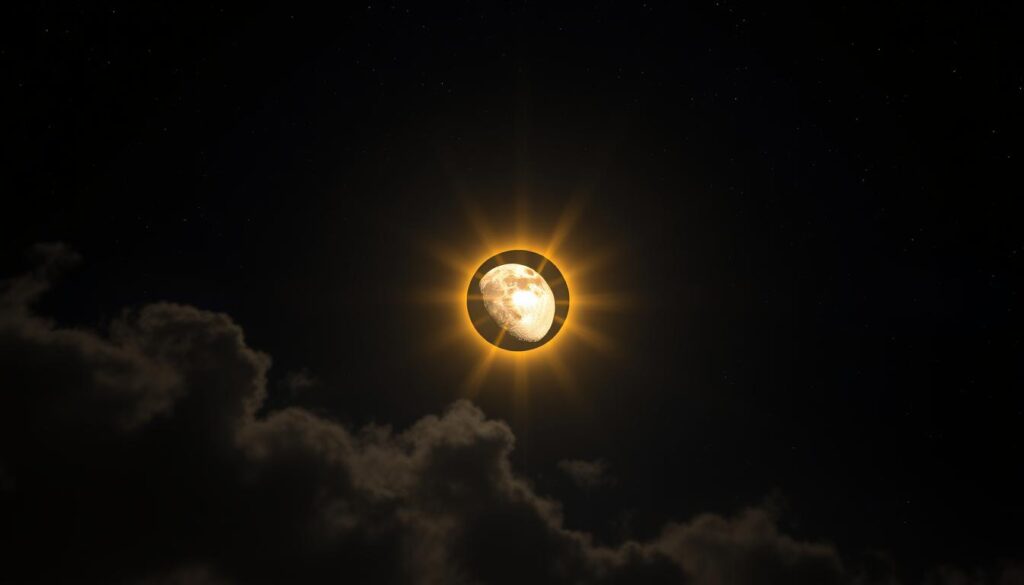
North America will see several big eclipse events soon. Keep an eye out for these rare chances to see the beauty of cosmic alignments. Details on dates and places will be shared early, so you can plan your viewing.
Safe Eclipse Viewing Practices
When watching an eclipse, eye safety is key. Use solar viewing glasses or handheld viewers that meet safety standards. Never look directly at the Sun without proper eye protection to avoid eye damage.
Stargazing Essentials for Beginners
You don’t need an expensive telescope to start enjoying the night sky. A little guidance is all you need to begin your stargazing journey. With the right tools and knowledge, anyone can enjoy the wonders of the cosmos.
Understanding seasonal constellations is a great starting point. As the Earth orbits the Sun, different constellations become visible in the night sky throughout the year. For instance, during winter, constellations like Orion are prominent, while in summer, you can spot constellations like Scorpius.
The North Star and Celestial Navigation
The North Star, or Polaris, is a key navigational aid. Located nearly in line with the Earth’s axis, it remains stationary in the sky while other stars appear to rotate around it. This makes it an excellent reference point for determining direction.
Top Astronomy Apps for Smartphones
In today’s digital age, astronomy apps can greatly enhance your stargazing experience. Apps like Sky Map and Star Walk use your smartphone’s GPS and compass to identify stars and constellations in real-time. This makes it easier to navigate the night sky.
Reading Traditional Star Charts
While digital tools are convenient, learning to read traditional star charts can deepen your understanding of the night sky. These charts map the stars and constellations, helping you to identify patterns and locate celestial objects.
By combining these tools and techniques, beginners can quickly progress from novice to confident stargazers. They can unlock the secrets of the universe one star at a time.
Equipment for Exploring the Night Sky
Exploring the night sky requires knowing about telescopes and how to take care of them. The right astronomy equipment makes stargazing better.
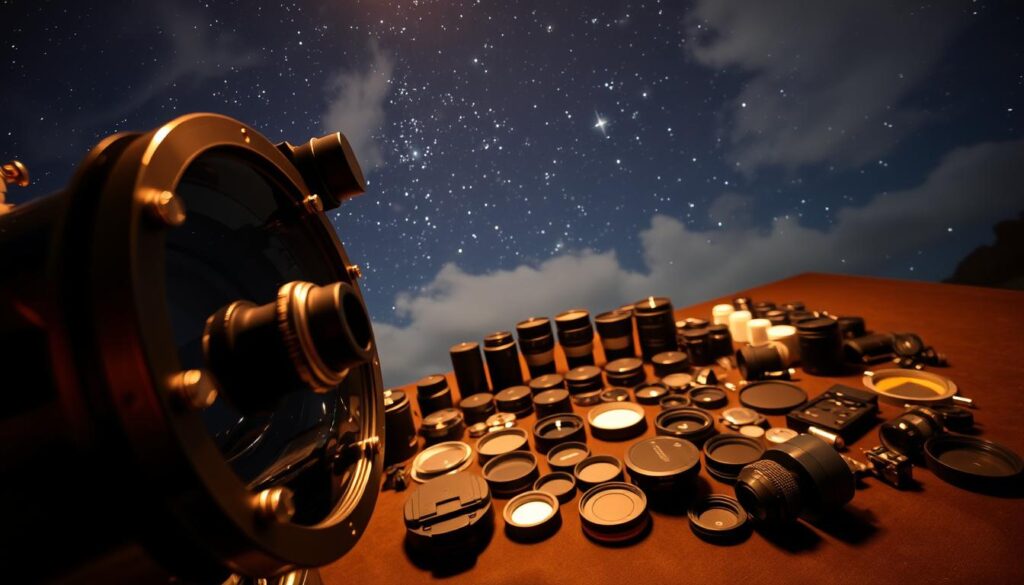
Choosing between a reflector or refractor telescope is key. Reflector telescopes use mirrors for light gathering, giving you a bigger view at a lower cost. They’re great for seeing deep in space. Refractor telescopes use lenses for clearer images and need less upkeep. They’re best for looking at planets.
Budget-Friendly Options
If you’re new to astronomy, there are budget-friendly options. Entry-level telescopes are a good start without spending a lot. Celestron and Meade offer affordable, reliable telescopes for beginners.
Essential Accessories for Night Viewing
There are essential accessories for better stargazing. You’ll need eyepieces, star charts, and red light flashlights to keep your night vision. Good accessories help you see more in the sky.
Maintaining Your Equipment
Keeping your telescopes in good shape is important. Clean lenses or mirrors, store them dry, and check alignment often. These simple steps help your equipment last longer and work better.
Knowing about telescopes, accessories, and maintenance makes astronomy more enjoyable.
The Best Stargazing Locations in America
The United States is full of amazing stargazing locations. You can find dark skies in national parks and remote spots away from city lights. These places offer unforgettable views of the night sky.
Western U.S. Viewing Spots
The Western United States is famous for its dark sky preserves and little light pollution. Big Bend National Park in Texas and Death Valley National Park in California are great for stargazing. If you’re near a lot of city lights, driving a bit further can help.
Even though the Eastern U.S. has more light pollution, there are many excellent stargazing spots. Acadia National Park in Maine and the Great Smoky Mountains National Park on the Tennessee-North Carolina border are top picks. They offer beautiful views and dark skies for a night under the stars.
Best Times of Year for Viewing
The best times for stargazing change by location, but summer and fall are usually clear across the U.S. Meteor showers and planetary alignments also offer great views. Planning your trip around these events can make it even better.
What to Pack for a Night Under the Stars
To enjoy your stargazing trip, be well-prepared. Bring a star chart or a stargazing app to spot celestial objects. Also, bring comfy seating, warm clothes, and a red light flashlight to keep your night vision. And don’t forget a camera to capture the memories.
Threats to Our View of the Cosmos
Our view of the cosmos is facing a big problem. Light pollution, caused by cities growing, is making it hard to see the stars. It’s also harming our environment.
Light pollution messes with animals’ natural cycles. It affects their breeding and eating habits. This leads to fewer animals and hurts biodiversity.
How to Reduce Light Pollution in Your Community
To fight light pollution, we need to work together. Using lights that don’t shine everywhere, turning off lights when not needed, and supporting dark sky preservation can help a lot.
International Dark Sky Association
The International Dark Sky Association (IDA) fights to keep the night sky dark. They help communities use better lighting. This keeps our environment healthy and lets future generations enjoy the stars.
Astronomy in the Digital Age
The digital age has changed how we explore the night sky. Now, thanks to new technology, people can easily take and study pictures of the stars.
Smartphone Astrophotography is now a hit. It lets people take amazing pictures of the sky with just their phones.
Smartphone Astrophotography Tips
For great shots, use a tripod for stability. Set your camera to manual mode. And edit your photos to make details pop.
Processing Your Night Sky Images
Use software to tweak brightness, contrast, and color. This brings out the fine details of stars and planets.
Citizen Science Projects
These projects let the public help scientists. Apps like the Loss of the Night app help track light pollution. This data is very useful for scientists.
Learning Resources and Courses
Online, you can find tutorials on astrophotography and astronomy. These resources help both newbies and seasoned enthusiasts learn more.
In conclusion, the digital age has made astronomy more fun and accessible. With technology, people can help science, learn about space, and enjoy the night sky like never before.
The Eternal Allure of the Night Sky
The night sky has amazed people for centuries. It brings a sense of wonder that crosses all cultures and ages. When we look up at the stars, we feel the vastness and mystery of the universe.
The night sky’s charm comes from connecting us to the cosmos and our place in it. We must protect dark skies. Light pollution is a big threat to seeing the night sky’s true beauty.
Protecting dark skies and encouraging stargazing is key. This way, the night sky’s magic can stay with us. It will inspire future generations to appreciate the stars above.